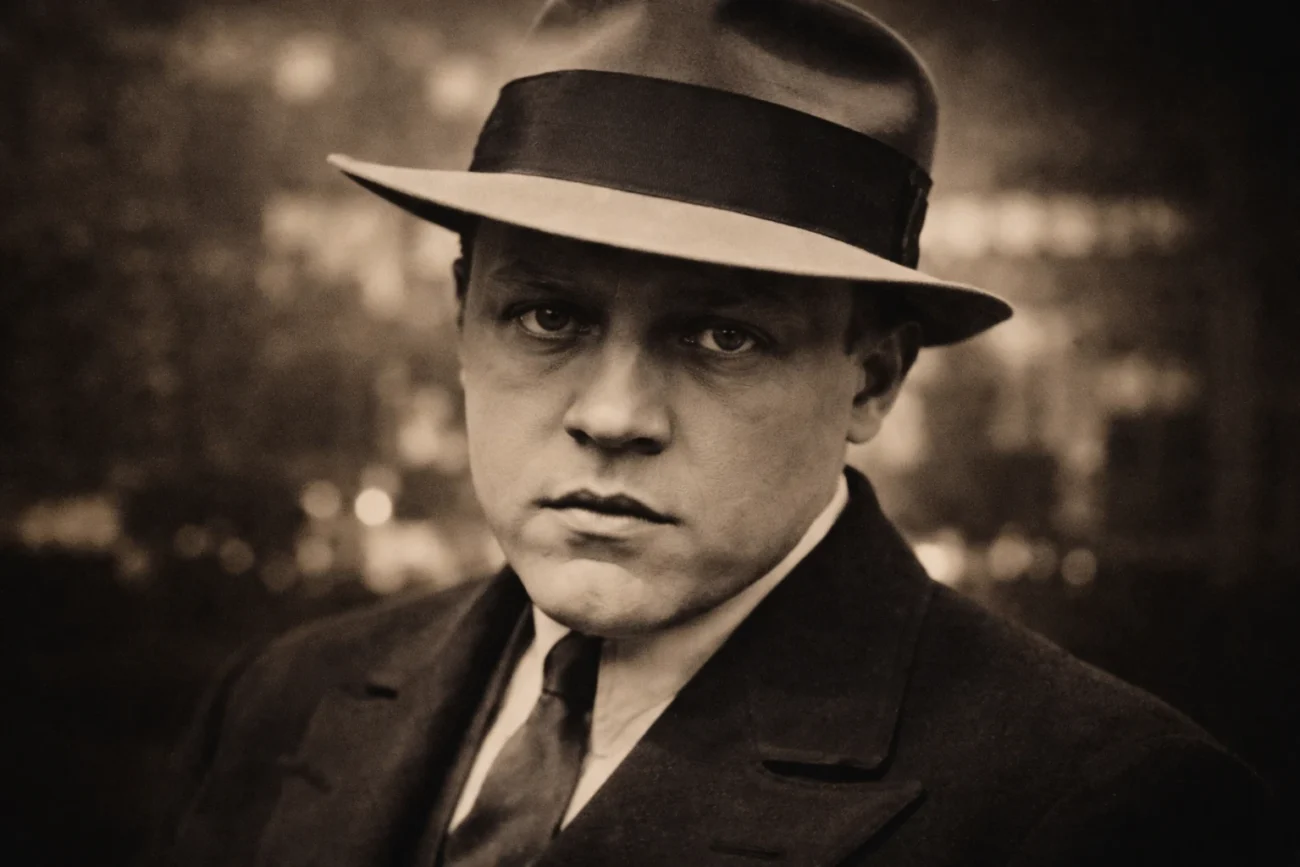
Most people who search the name “Paul Walken” aren’t looking for a celebrity in the usual sense. They’re trying to understand a quieter figure, a man whose life unfolded far from movie sets and red carpets but still left a mark on one of Hollywood’s most recognizable actors. Paul Walken was not famous in his own right. But he was central to the family life that shaped Christopher Walken, and that connection has kept his name circulating decades after his death.
The truth is, the available record on Paul Walken is thinner than many expect. There are no long interviews, no memoirs, and very few detailed public accounts. What exists comes from scattered records, brief references in profiles of his son, and the occasional recollection tied to a bakery in Queens. Still, when those pieces are assembled carefully, a picture emerges of a German immigrant who built a working-class life in New York and raised a family that would go on to intersect with American culture in surprising ways.
Early Life and German Roots
Paul Walken, born Paul Wälken, entered the world in Germany in the early years of the 20th century. Most sources place his birth around 1903, though exact details vary depending on the record consulted. He came from a part of Germany often described as industrial, with cities like Gelsenkirchen and Essen frequently mentioned in connection with his origins.
His early years unfolded during a period of major upheaval in Europe. Germany was moving through the aftermath of World War I, economic instability, and social change. While there is little documentation about his childhood, it is reasonable to assume that these broader forces shaped his decision to leave. Like many immigrants of his generation, he would eventually look west toward the United States for stability and opportunity.
The move to America likely took place in the late 1920s, though exact immigration dates are not consistently recorded across sources. What is clear is that by the time he settled in New York, he was part of a larger wave of European immigrants who were rebuilding their lives in working-class neighborhoods. He brought with him both his skills and his cultural identity, including an accent that would later echo through his household.
Building a Life in Astoria, Queens
Once in New York, Paul Walken established himself as a baker, a trade that required long hours and steady discipline. He eventually owned or operated a bakery in Astoria, Queens, a neighborhood known for its dense immigrant communities and strong local ties. The bakery became both his livelihood and the center of his daily routine.
Astoria in the mid-20th century was a place where small businesses defined the rhythm of life. Bakeries, butcher shops, and family-run stores anchored entire blocks, and the people who ran them often worked before dawn and long after sunset. Paul Walken’s work fit squarely into that pattern. Baking is not a nine-to-five job, and those early mornings shaped the structure of his family’s days.
Not many people know this, but the bakery itself has been remembered in connection with another future public figure. Chef and television personality Lidia Bastianich has spoken about working at Walken’s bakery as a teenager. That detail, small as it may seem, places the business within a broader web of immigrant stories in New York, where paths crossed in ways no one could predict at the time.
The bakery also represented something more personal. It was a symbol of independence and survival, built through manual labor and persistence. For Paul Walken, it was not just a job but a foundation for his family’s future in the United States.
Family Life and a Household of Three Sons
Paul Walken married Rosalie Russell, an American-born woman with Scottish roots, and together they raised three sons: Kenneth, Ronald, and Glenn. Ronald would later become known to the world as Christopher Walken. The family lived in Queens, where their home life was closely tied to the demands of the bakery.
Growing up in that household meant exposure to both European and American influences. Rosalie encouraged her children’s interest in the arts, while Paul’s work ethic and immigrant background provided a different kind of grounding. The mix created a home that was neither strictly traditional nor entirely conventional for its time.
Christopher Walken has spoken in interviews about the sound of his parents’ voices, particularly their accents. He has described how the cadence of their speech influenced his own distinctive way of talking. That connection is one of the clearest examples of Paul Walken’s lasting imprint, even if it is not always immediately obvious.
The truth is, raising three boys in mid-century New York required constant effort. There was no guarantee of success, and the family’s daily life was shaped by the practical demands of running a small business. Yet within that environment, something unexpected was taking shape.
A Working Father’s Influence
Paul Walken did not guide his children into show business directly, nor did he cultivate a public persona. His influence was quieter and more indirect, rooted in the habits of daily life. He worked hard, kept a routine, and provided stability in a city that could be unpredictable.
Christopher Walken has often described himself as someone who grew up around work rather than around glamour. His early experiences included performing as a child actor and appearing in television roles, but those opportunities existed alongside the steady presence of his father’s bakery. The contrast between those two worlds—performance and labor—helped define his outlook.
But here’s the thing: influence does not always come from explicit instruction. Sometimes it comes from observation. Watching a parent wake before dawn, manage a business, and maintain a household leaves an impression that is difficult to quantify but impossible to ignore. In that sense, Paul Walken’s role in his son’s life was foundational, even if it was never publicly framed that way.
The Public Record and Its Gaps
For anyone trying to write a detailed biography of Paul Walken, the first challenge is the limited documentation. Basic facts such as birth and death dates are not always consistent across sources. Some records suggest he lived into his later years, while others provide earlier dates that conflict with those accounts.
This inconsistency highlights a broader issue. Paul Walken was not a public figure in the traditional sense, and his life was not recorded with the same level of detail as his son’s career. Much of what is known comes from indirect references, family connections, and local history rather than from primary documents or extensive reporting.
That said, the lack of detail does not make his story less meaningful. It simply requires a more careful approach. Instead of filling in gaps with speculation, it is better to acknowledge what can be confirmed and leave space for what remains uncertain.
Christopher Walken’s Rise and the Family Connection
As Christopher Walken’s career took off, first in theater and television and later in film, his family background became part of the story told about him. Profiles of the actor often mention his upbringing in Queens and his parents’ roles in shaping his personality. Paul Walken appears in those accounts as a steady presence rather than a central character.
Christopher Walken won an Academy Award for his role in The Deer Hunter in 1978, a performance that brought him widespread recognition. By that point, his father’s life as a baker in Queens was far removed from the world of Hollywood. Yet the connection remained, a reminder of where he came from.
Here’s where it gets interesting. The contrast between Christopher Walken’s unusual screen presence and his grounded upbringing has become part of his appeal. His voice, his timing, and his approach to acting all feel distinct, and many observers have traced those qualities back to his early environment.
Paul Walken did not step into the spotlight, but his influence can be seen in the shape of his son’s career. It is not a direct line, but it is there.
The Bakery’s Place in Local Memory
Walken’s bakery, once a fixture in Astoria, has taken on a kind of quiet afterlife in local memory. People who grew up in the neighborhood remember the smell of fresh bread, the early hours, and the sense of community that surrounded such businesses. While the bakery itself is no longer operating, its presence lingers in stories passed down over time.
For historians of New York City, small businesses like this one are essential to understanding how neighborhoods functioned. They were places where people met, exchanged news, and built relationships. Paul Walken’s bakery was one of many, but its connection to a future film star gives it a slightly different place in that history.
The truth is, thousands of similar stories exist across the city. What makes this one stand out is not the scale of the business but the path one of its children would take.
Later Years and Legacy
Details about Paul Walken’s later years are limited, and accounts vary. What is clear is that he lived long enough to see his son begin to achieve recognition in the entertainment industry. Whether he fully witnessed the height of Christopher Walken’s fame is less certain, depending on which records are consulted.
His legacy is not defined by awards or public honors. Instead, it lives on through family, through the memory of a business that once served a neighborhood, and through the influence he had on his children. It is a quieter kind of legacy, one that does not rely on public recognition.
Not everyone agrees on how much weight to place on such influence, especially when it comes to shaping a creative career. But it is difficult to ignore the role of early environment in forming a person’s identity. In that sense, Paul Walken’s impact continues to be felt, even if it is rarely discussed in detail.
Clearing Up the Name Confusion
One reason the name “Paul Walken” continues to attract attention is simple confusion. Many people searching for the name are actually thinking of Paul Walker, the late actor known for his role in the Fast & Furious films. The similarity in spelling leads to frequent mix-ups.
That said, the two men are entirely unrelated. Paul Walker was an American actor born in 1973, while Paul Walken was a German-born baker who lived decades earlier. Clarifying that distinction is important, especially for readers encountering the name for the first time.
Understanding this difference also helps explain why the search term remains active. Some readers arrive by mistake, but others stay because they discover a story they did not expect.
Frequently Asked Questions
Who was Paul Walken?
Paul Walken was a German-born baker who lived in New York City and is best known as the father of actor Christopher Walken. He operated a bakery in Astoria, Queens, and raised his family there. While he was not a public figure, his life has drawn interest because of his connection to his son. His story is largely reconstructed from family references and local history.
Was Paul Walken related to Christopher Walken?
Yes, Paul Walken was Christopher Walken’s father. Christopher Walken, born Ronald Walken, grew up in Queens with his parents and two brothers. His father’s work as a baker and his mother’s encouragement of the arts shaped his early environment. The family connection is the main reason Paul Walken’s name appears in public records.
What did Paul Walken do for a living?
Paul Walken worked as a baker and operated a bakery in Astoria, Queens. His job involved long hours and physical labor, which were typical of small business owners in that era. The bakery served as both his livelihood and a central part of his family’s daily life. It also became a point of reference in stories about Christopher Walken’s upbringing.
Where was Paul Walken from?
Paul Walken was born in Germany, with some records linking him to industrial regions such as Gelsenkirchen. He later immigrated to the United States, likely in the late 1920s. His background reflects the broader wave of European immigrants who settled in New York during that period. His heritage remained part of his identity throughout his life.
Is Paul Walken the same person as Paul Walker?
No, Paul Walken and Paul Walker are different individuals. Paul Walker was a well-known American actor born in 1973 and associated with the Fast & Furious franchise. Paul Walken, by contrast, was a baker and the father of Christopher Walken. The confusion arises from the similarity in their names, but they have no connection.
Conclusion
Paul Walken’s life does not fit neatly into the kind of biography usually written about public figures. There are no major headlines, no defining public moments, and no extensive archive of interviews or personal writings. What remains is something quieter and, in its own way, more familiar. He was a man who worked, raised a family, and built a life in a city that has always been shaped by people like him.
But here’s the thing: stories like his often sit just beneath the surface of more visible histories. Without Paul Walken, there would still be a Christopher Walken, but he would not be quite the same person. The rhythms of speech, the sense of discipline, and the grounding in everyday work all trace back to a household shaped by his parents.
There’s a certain honesty in acknowledging how much of life goes undocumented. Not every meaningful story is preserved in detail, and not every influence can be measured. Yet even in the gaps, a sense of character comes through. Paul Walken’s story is not about fame. It is about the kind of life that quietly supports it.
Looking ahead, interest in his name is likely to continue, driven by curiosity about Christopher Walken and the roots of his distinctive presence. Each search is a small reminder that behind every public figure is a network of lives that made that success possible. Paul Walken stands as one of those figures, still shaping a legacy that extends far beyond the walls of a bakery in Queens.
