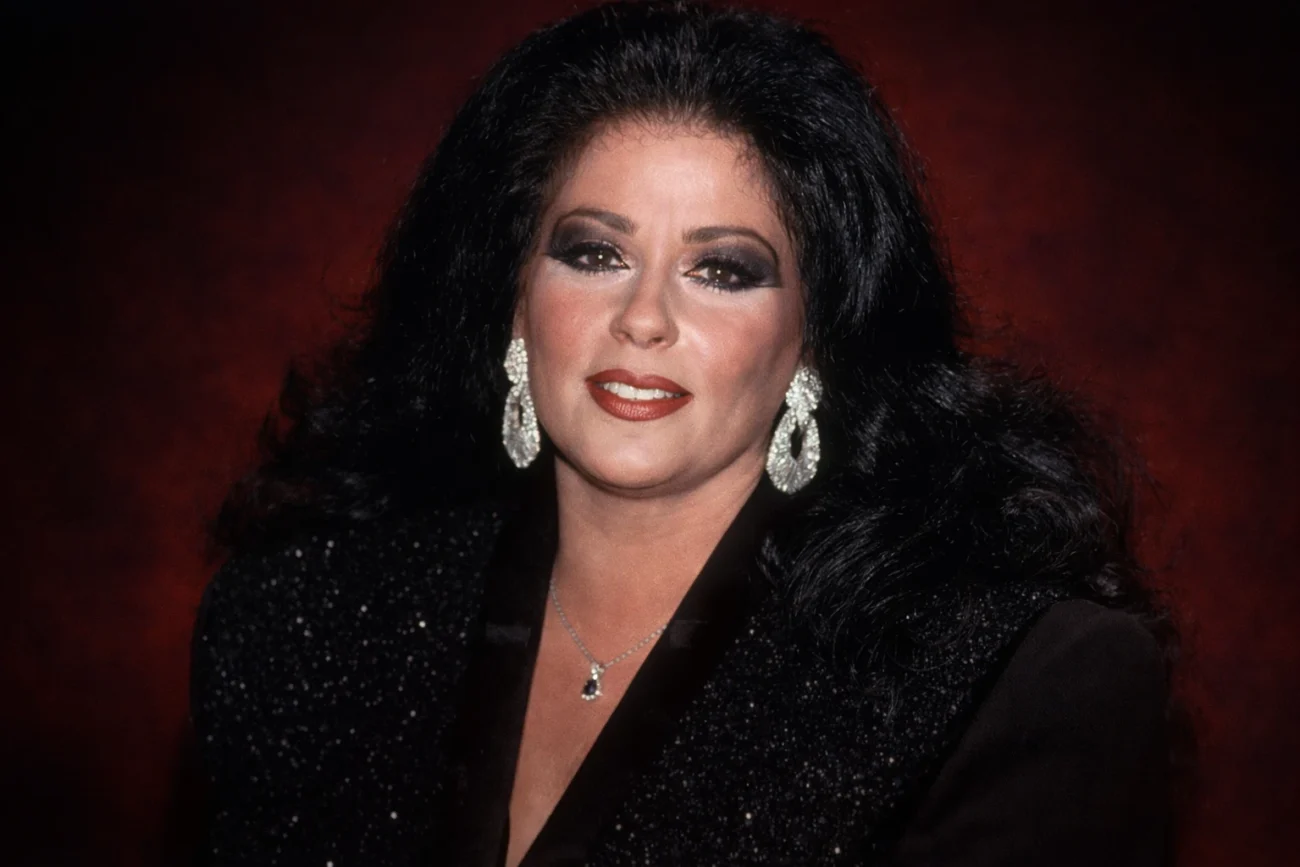
For many people, the name Adrienne Rodriguez appears suddenly and without context—tucked inside a biography of James Brown, mentioned in passing in accounts of the singer’s turbulent personal life, or raised in online searches that promise far more than they can prove. She was not a public performer, not a celebrity in her own right, and not someone who left behind interviews or a carefully documented public record. Yet her life has remained part of a much larger story, one tied to fame, controversy, and the uneasy line between private life and public spectacle.
Adrienne Lois Rodriguez, later known as Adrienne Brown, was the third wife of James Brown, the “Godfather of Soul.” Their marriage, which began in the early 1980s, would become one of the most scrutinized and troubled relationships in Brown’s life. But reducing her story to that connection alone misses something important. Her life sits at the intersection of celebrity culture and the limits of what the public can truly know about someone who never sought the spotlight.
Early Life and Background
Reliable details about Adrienne Rodriguez’s early life are surprisingly scarce, and that absence shapes how her story must be told. Unlike many public figures, she did not build a career that left behind interviews, credits, or a detailed paper trail. Most of what is known comes from records connected to her marriage, legal filings, and contemporary reporting from the 1980s and 1990s.
Her full name was Adrienne Lois Rodriguez. She was born in the United States, though widely circulated online claims about her birthplace, education, or early ambitions often lack strong sourcing. That’s part of the challenge with her story: much of the modern internet content about her repeats details that appear to trace back to each other rather than to primary evidence.
What can be said with confidence is that she lived largely outside public attention until her relationship with James Brown brought her into it. That transition—from private individual to someone connected to a global celebrity—would define how her life was later remembered.
Meeting James Brown and Entering the Public Eye
Adrienne Rodriguez married James Brown in 1984, becoming his third wife. By that point, Brown was already one of the most influential musicians of the 20th century, known for hits like “I Got You (I Feel Good)” and “Papa’s Got a Brand New Bag.” His public persona was larger than life, built on relentless touring, sharp style, and a commanding stage presence.
Their marriage placed Rodriguez in a world shaped by fame, money, and intense scrutiny. But unlike many spouses of celebrities who step into public roles—whether through business ventures, philanthropy, or media appearances—Rodriguez remained largely out of the spotlight. She did not cultivate a public career or brand. Instead, her visibility came almost entirely through her association with Brown.
That said, the relationship itself quickly became a matter of public record, not because of glamour but because of conflict. By the mid-1980s, reports of domestic disputes between Brown and Rodriguez had begun to surface, drawing attention from both law enforcement and the press.
A Marriage Marked by Turbulence
The relationship between Adrienne Rodriguez and James Brown was widely reported as volatile. Over the years, Brown faced multiple arrests related to incidents involving Rodriguez, including charges connected to domestic violence. These incidents were documented in police reports and covered by major news outlets at the time, making them one of the most visible aspects of their marriage.
Brown’s legal troubles during the late 1980s often intersected with his personal life, and Rodriguez’s name appeared repeatedly in those accounts. The details varied from case to case, but the pattern was difficult to ignore. Their marriage, rather than being a quiet partnership, became part of the public narrative surrounding Brown’s increasingly erratic behavior during that period.
Here’s where it gets complicated. Public reporting captured the legal and factual elements—arrests, charges, court appearances—but it did not provide a full picture of their private lives. There are no extensive interviews from Rodriguez offering her perspective, and Brown’s own accounts were shaped by his public persona and legal strategy.
The result is a story that is partly documented and partly opaque. What remains clear is that the relationship was troubled, and that those troubles had real legal consequences.
Separation, Legal Battles, and an Uncertain Status
In 1988, reports indicate that divorce proceedings between Brown and Rodriguez were initiated. The details of those proceedings, including whether the divorce was finalized or contested, have been described differently in various sources. Some accounts suggest that the couple remained legally married at the time of her death, while others point to a more complicated legal status.
What is certain is that their relationship did not follow a clean, linear path from marriage to separation. Instead, it reflected the instability that had already marked much of their time together. Legal disputes, public incidents, and ongoing tensions made it difficult to draw a clear line between when the marriage effectively ended and when it formally did.
But here’s the thing: even as their relationship fractured, Rodriguez remained tied to Brown’s story in the public eye. She was not someone who stepped away and rebuilt a separate public identity. Her name continued to appear alongside his, shaped by events that were often beyond her control.
The Final Days and Her Death in 1996
Adrienne Rodriguez died in January 1996 at the age of 45. Contemporary news reports at the time stated that she had undergone elective surgery shortly before her death. Within days, she suffered complications that proved fatal.
Early reporting pointed to heart-related issues as a contributing factor, with some accounts referencing underlying heart disease. Unlike later internet narratives that sometimes frame her death as mysterious or unresolved, the reporting at the time did not suggest a criminal cause. Instead, it described a medical event following surgery, complicated by existing health conditions.
That distinction matters. Over time, as her story has been retold online, speculation has sometimes replaced documentation. Phrases like “mysterious death” appear in modern articles, often without clear evidence to support them. The original reporting, however, paints a more grounded picture, one rooted in medical explanation rather than conspiracy.
Her death marked the end of a life that had been partially visible but never fully understood by the public. It also closed a chapter in James Brown’s personal history, though the impact of their relationship would continue to be discussed in biographies and retrospectives about him.
Life Beyond the Headlines
One of the most striking aspects of Adrienne Rodriguez’s story is how little is known about her independent life. Unlike many figures connected to major celebrities, she did not leave behind a body of work, public statements, or a clear record of professional achievements.
Some modern websites claim she was involved in music or worked as a singer or stylist, but these claims are difficult to verify through credible sources. There is no widely recognized discography, filmography, or professional portfolio tied to her name. That absence should not be filled with guesswork.
The truth is simpler, though perhaps less satisfying to readers looking for a full biography. Adrienne Rodriguez lived much of her life outside the structures that generate public records. Her visibility came late, and it came through a relationship rather than a career.
That doesn’t make her story less important. It simply means it must be told with care, without adding details that cannot be supported.
How the Internet Rewrote Her Story
In recent years, Adrienne Rodriguez’s name has appeared across dozens of online biography sites, many of which present detailed accounts of her childhood, education, career, and finances. On the surface, these articles appear thorough. But a closer look reveals a pattern of repetition, where the same claims are echoed across multiple sites without clear sourcing.
This is where readers need to be cautious. The presence of detail does not always mean the presence of truth. In Rodriguez’s case, the most reliable information still comes from contemporary news reports, legal records, and well-researched biographies of James Brown.
What’s surprising is how quickly uncertain details can become accepted as fact when repeated often enough. A claim about her profession or background may appear in dozens of articles, giving it the appearance of credibility, even if its origin is unclear.
That said, the continued interest in her life reflects something real. People are not just searching for facts. They are trying to understand the human story behind a name that appears in a larger narrative.
Public Memory and Cultural Context
Adrienne Rodriguez’s story cannot be separated from the cultural moment in which it unfolded. The 1980s and early 1990s were a time when domestic violence involving public figures was reported, but not always examined with the depth or sensitivity seen today. Coverage often focused on the celebrity involved rather than the broader implications.
James Brown’s fame ensured that his legal troubles were covered, but the way those stories were framed reflected the norms of the time. Rodriguez’s role in those narratives was often secondary, defined by her relationship to Brown rather than by her own identity.
Looking back, there is a growing awareness of how those stories were told and what they left out. Her life offers a reminder that behind every headline is a person whose full story may never be completely known.
Frequently Asked Questions
FAQ
Who was Adrienne Rodriguez?
Adrienne Rodriguez, also known as Adrienne Lois Brown, was the third wife of legendary musician James Brown. She became publicly known through her marriage to him, particularly during the 1980s. Beyond that relationship, there is limited verified information about her personal or professional life. Much of what is known comes from news reports and legal records connected to that period.
When did Adrienne Rodriguez marry James Brown?
Adrienne Rodriguez married James Brown in 1984. Their marriage lasted several years and was marked by publicized disputes and legal incidents. Reports indicate that divorce proceedings began in the late 1980s, though accounts differ on the final legal status of their relationship. She remained closely associated with Brown’s public story until her death.
How did Adrienne Rodriguez die?
Adrienne Rodriguez died in January 1996 at the age of 45. Contemporary reports stated that her death followed complications after elective surgery. Medical factors, including possible heart-related issues, were cited as contributing causes. Later claims describing her death as mysterious are not strongly supported by original reporting.
Did Adrienne Rodriguez have a career in entertainment?
There is no widely verified evidence that Adrienne Rodriguez had a significant public career in music or entertainment. Some modern websites describe her as a singer or stylist, but these claims are difficult to confirm through reliable sources. Most credible information about her life centers on her marriage to James Brown rather than an independent professional career.
Why is Adrienne Rodriguez still searched today?
Interest in Adrienne Rodriguez continues largely because of her connection to James Brown. Readers encountering her name in biographies, documentaries, or articles about Brown often search for more information. The limited and sometimes conflicting information available online also drives curiosity, as people try to separate fact from speculation.
Conclusion
Adrienne Rodriguez’s life resists easy summary. She was not a public figure in the usual sense, and she did not leave behind the kind of record that allows for a full, detailed biography. What remains is a story shaped by fragments—legal documents, news reports, and the broader narrative of a famous man whose life intersected with hers.
That said, her story still matters. It offers a glimpse into how private lives can become public under the pressure of fame, and how those lives are later remembered through incomplete and sometimes distorted records. It also raises questions about how history is written, and whose voices are preserved.
The truth is, Adrienne Rodriguez’s life cannot be fully reconstructed from what remains. But that absence is part of the story. It reminds us that not every life connected to fame is documented in equal measure, and that sometimes the most honest account is the one that acknowledges its limits.
What endures is not a complete portrait, but a careful outline—one that respects both what is known and what remains uncertain. In a world eager for neat narratives, that kind of honesty is rare. And in the case of Adrienne Rodriguez, it may be the closest thing to getting her story right.
