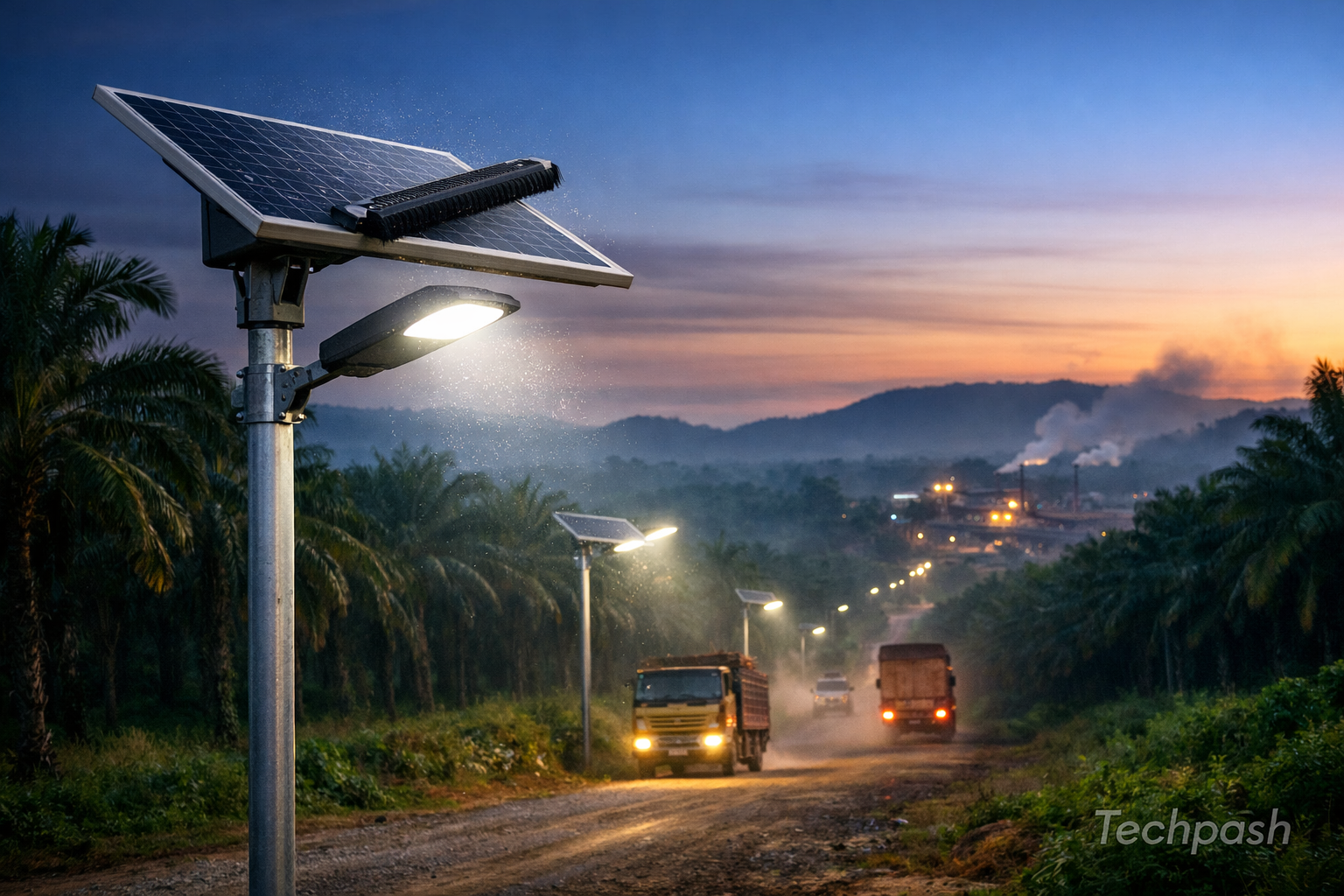
Palm oil plantations operate across vast areas where reliable infrastructure is essential. One often overlooked but critical element is lighting. Plantation roads, processing zones, and worker housing areas require dependable lighting to maintain safety and productivity. However, traditional lighting systems struggle in these environments because of dust, humidity, and oil residue.
Self cleaning street light palm oil solutions are emerging as an effective answer to these challenges. These systems combine solar-powered LED lighting with automatic cleaning mechanisms that maintain panel efficiency. By reducing maintenance needs and ensuring consistent illumination, they are becoming increasingly valuable for modern plantations.
Why Lighting Matters in Palm Oil Plantations
Palm oil estates can span thousands of hectares. Workers, vehicles, and heavy equipment move across these areas day and night. Without proper lighting, operations become riskier and less efficient.
Reliable street lighting improves visibility along plantation roads and reduces the chances of accidents involving trucks or motorcycles. It also increases security, especially in remote areas where patrol teams rely on clear visibility. In addition, well-lit worker housing areas contribute to safer living environments for employees and their families.
Traditional lighting systems often depend on grid electricity, which can be unreliable in rural regions. Maintenance crews must frequently travel long distances to repair damaged or dirty fixtures. Over time, these recurring service trips raise operational costs and create unnecessary downtime.
How Self Cleaning Street Lights Work
Self cleaning street lights are designed to address the most common problem affecting solar lighting systems: dirt accumulation on solar panels. In plantation environments, dust from roads, organic debris, and oil residue can quickly reduce the efficiency of solar panels.
These advanced lighting systems use a built-in mechanism that periodically removes dirt from the solar surface. Some systems use rotating brushes, while others rely on automated wipers or vibration technology. The cleaning process runs automatically at scheduled intervals, ensuring that the panel continues to capture sunlight effectively.
Because the panels stay clean, the battery receives a stronger charge during the day. This helps maintain stable lighting throughout the night. Plantation managers therefore experience fewer outages and more reliable illumination across their sites.
Benefits for Plantation Operations
The adoption of self cleaning street light palm oil solutions brings several operational advantages. One of the most important benefits is reduced maintenance requirements. When solar panels remain clean, technicians no longer need to wash them frequently. This lowers labor costs and allows maintenance teams to focus on more critical equipment.
Energy independence is another key advantage. Solar street lights generate their own electricity, which eliminates dependence on unstable grid connections. For remote plantation areas, this provides consistent lighting even during power outages.
Improved durability also makes these systems attractive. Most modern units are designed to withstand tropical climates with strong rain, humidity, and high temperatures. Corrosion-resistant materials and sealed components help extend the lifespan of the equipment.
In addition, LED lighting technology consumes far less energy than traditional lamps. The combination of efficient LEDs and solar power significantly lowers long-term operating costs.
The Role of Solar Technology in Modern Agriculture
Agricultural industries are increasingly adopting renewable technologies to improve efficiency and sustainability. Solar-powered lighting fits naturally within this shift.
In palm oil plantations, solar street lights can be installed quickly without trenching or extensive electrical infrastructure. This makes expansion projects easier because lighting can be deployed wherever new roads or facilities appear.
Renewable solutions also help companies demonstrate commitment to responsible resource management. As global attention on environmental standards continues to grow, energy-efficient technologies contribute to better corporate practices.
Furthermore, solar lighting systems often include smart controllers that adjust brightness based on motion detection or scheduled dimming. These features further reduce energy consumption while maintaining safety.
Challenges and Considerations
Despite their advantages, self cleaning street lights must be carefully selected to perform well in plantation environments. Not all products are built to handle the heavy contamination found near palm oil processing facilities.
The cleaning mechanism must be durable enough to operate in humid conditions. Poorly designed systems may fail after repeated exposure to moisture or residue. Battery capacity is also critical because plantation locations often experience cloudy days or heavy rainfall.
Installation planning is another important factor. Proper pole spacing and light distribution ensure that roads and work areas receive adequate illumination. A poorly designed layout can create dark zones that reduce safety.
Finally, plantation managers should evaluate the total lifecycle cost of each system rather than focusing solely on the initial purchase price. High-quality equipment often proves more economical over time due to reduced maintenance and longer service life.
Future Trends in Plantation Lighting
The future of plantation infrastructure will likely involve more automation and smarter technology. Lighting systems are already evolving to include remote monitoring and performance tracking.
With connected sensors, operators can monitor battery levels, lighting performance, and system health from a central platform. If a unit requires maintenance, alerts can be sent automatically to technicians. This reduces response times and prevents long periods of darkness.
Artificial intelligence may also play a role in future lighting systems by analyzing usage patterns and adjusting brightness levels accordingly. These improvements will further optimize energy efficiency and operational reliability.
As palm oil plantations continue modernizing their operations, advanced lighting systems will become a standard component of infrastructure planning.
Conclusion
Self cleaning street light palm oil solutions represent a practical innovation for large plantation environments. By combining solar energy, LED technology, and automated cleaning systems, these lights provide reliable illumination while minimizing maintenance demands.
For plantation managers, the benefits extend beyond simple lighting. Improved safety, reduced operational costs, and greater energy independence make these systems an attractive investment. As renewable technology continues advancing, self cleaning solar street lights are likely to play an important role in the future of agricultural infrastructure.
