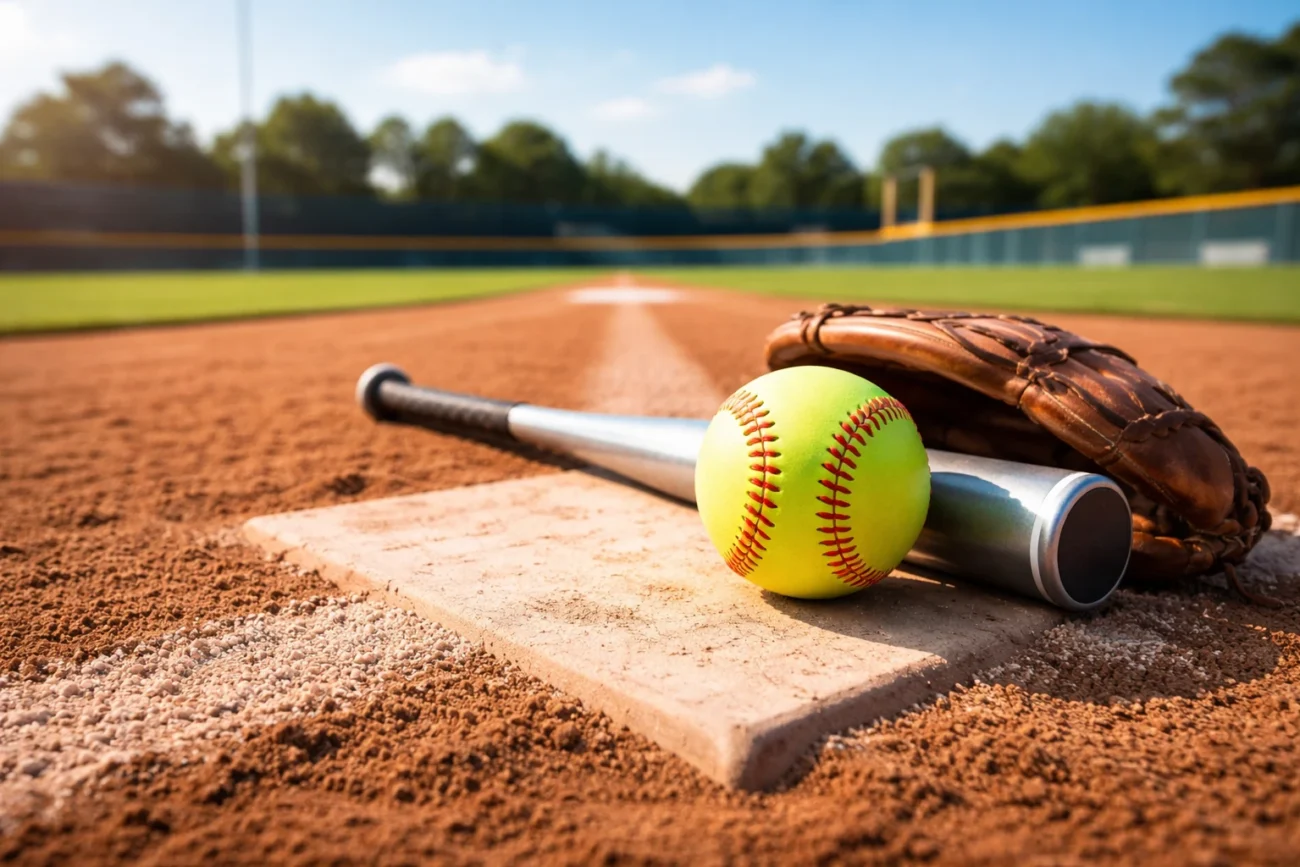
At first glance, “sã³fbol” looks like a word that shouldn’t exist. It shows up in search results, on misformatted websites, and sometimes in copied text that clearly went through a broken encoding filter. But most of the time, people typing or reading “sã³fbol” are actually looking for something very real: sófbol, the Spanish word for softball.
That small distortion in spelling opens the door to a bigger story. Softball is often treated as baseball’s quieter sibling, a sport people think they already understand. But that assumption doesn’t hold up for long. Its history, its global reach, and its uneasy relationship with the Olympics make it far more interesting than the casual label suggests.
So let’s clear up the term first. Then we’ll get into the game itself, how it works, where it came from, and why it still matters.
What “sã³fbol” Actually Refers To
The term “sã³fbol” is almost certainly a text-encoding error. In Spanish, the sport is written as “sófbol” or sometimes “softbol,” depending on regional usage. When character encoding breaks—usually when special characters like “ó” aren’t handled correctly—it can turn into something like “ã³.”
But here’s the thing: search engines don’t ignore those mistakes. People copy, paste, and search exactly what they see. That’s how “sã³fbol” ends up as a keyword, even though it isn’t a proper spelling.
So what does this actually mean for the reader? It means you’re looking at softball, just through a distorted lens. And once you correct that lens, the subject becomes clear.
What Is Softball?
Softball is a bat-and-ball sport closely related to baseball, but it has its own identity, rules, and pace. The game is played with a larger ball, on a smaller field, and most importantly, with an underhand pitching motion rather than an overhand throw.
That change in pitching style reshapes everything. The ball comes in differently, hitters adjust their timing, and the rhythm of the game shifts. It’s faster in some ways, more compact in others, and often more intense over shorter distances.
Despite the name, the ball isn’t soft. It’s actually quite firm, and the term dates back to earlier versions of the game when softer equipment was used indoors. The name stuck, even as the sport evolved.
How Softball Started in Chicago in 1887
The origin story of softball doesn’t begin on a sunlit field. It starts indoors, in Chicago, in 1887. A group of men had gathered at the Farragut Boat Club to follow a Yale–Harvard football game. When the result came in, someone tossed a boxing glove across the room, and another person swung at it with a stick.
George Hancock, a reporter present that day, saw something in the chaos. He tied up the glove to form a ball, marked out a field on the floor, and created a quick set of rules. What followed was the first version of what would become softball.
At first, it was called “indoor baseball.” Over time, it moved outdoors, the equipment changed, and the rules settled into something recognizable today. By the early 20th century, the sport had spread across the United States, particularly in schools and recreational leagues.
That origin matters because it explains why softball has always been adaptable. It wasn’t born as a rigid system. It grew out of improvisation.
Softball vs. Baseball: The Key Differences
People often reduce softball to “just baseball with a bigger ball.” That’s not wrong, but it misses the details that actually define the experience.
The field is smaller, which means everything happens faster. Base paths are shorter, the pitcher stands closer, and plays unfold in tighter spaces. Reaction time matters more, and small mistakes are harder to recover from.
Pitching is the most obvious difference. In softball, especially fastpitch, the pitcher uses a windmill motion, releasing the ball underhand. The speed can still be high, and because of the shorter distance, hitters often have less time to react than they would in baseball.
The ball itself is larger, which affects grip, spin, and how it moves through the air. Defensive play also shifts slightly because of how the ball behaves on contact.
So while the two sports share DNA, they feel different once you’re inside the game.
The Different Forms of Softball
Not all softball is played the same way. There are a few main versions, and each one changes the pace and style of the game.
Fastpitch is the version most people see at elite levels, including international competitions. The pitching is quick and aggressive, and the game demands sharp defense and precise hitting.
Slowpitch, on the other hand, is more common in recreational leagues. The pitch arcs high and drops into the strike zone, making it easier to hit. That shifts the focus toward offense and social play rather than high-level competition.
There’s also a modified version in some regions, which sits somewhere between the two. The details vary, but the idea is to adjust the speed and rules to suit local preferences.
That flexibility is one reason the sport has lasted. It can be competitive or casual, structured or relaxed, depending on where and how it’s played.
Why Softball Keeps Returning to the Olympic Conversation
Softball’s relationship with the Olympics has never been stable. It debuted in the Summer Games in 1996 and stayed until 2008. Then it disappeared. It came back for the Tokyo 2020 Games, only to be left out again for Paris 2024.
Now it’s set to return for the Los Angeles 2028 Olympics, with games planned in Oklahoma City. That back-and-forth tells you something important about the sport’s position on the global stage.
On one hand, softball has a strong international following, especially in countries like the United States, Japan, and parts of Latin America. On the other hand, its global footprint isn’t as broad as some other Olympic sports, which makes it more vulnerable when the program is adjusted.
That said, its return for LA28 suggests it still carries weight, particularly when host nations have a strong connection to the sport.
Who Dominates Softball Today?
If you look at international competition, a few countries consistently rise to the top. The United States has long been a powerhouse, with deep talent pools and strong collegiate systems. Japan is equally formidable, with disciplined play and a history of Olympic success.
Puerto Rico and other nations have also made strides, reflecting the sport’s spread beyond its traditional centers. The competitive balance isn’t perfectly even, but it’s not as narrow as it once was.
That global presence matters, especially when the sport’s Olympic future is debated. A wider base of competitive teams makes a stronger case for inclusion.
Why the Name Changes Across Languages
The difference between “softball,” “softbol,” and “sófbol” isn’t just about spelling. It reflects how languages adapt borrowed words.
In Spanish-speaking countries, you’ll see both “softbol” and “sófbol.” Some regions lean toward phonetic adaptation, while others keep closer to the English form. Spain’s official federation uses “sófbol,” while parts of Latin America often use “softbol.”
Then there’s the issue of encoding, which brings us back to “sã³fbol.” When systems fail to handle accented characters correctly, the text breaks. That’s not a linguistic choice. It’s a technical glitch that became visible to users.
Understanding that helps explain why the keyword exists in the first place.
Softball Beyond the Headlines
Softball doesn’t always dominate sports coverage, but it holds a steady place in schools, communities, and amateur leagues. In the United States, it’s deeply tied to high school and college athletics, especially for women.
That pipeline has real consequences. It shapes opportunities, scholarships, and professional pathways, even if the professional leagues don’t get the same attention as other sports.
Outside the U.S., the sport often grows through national federations and regional competitions. It may not always grab headlines, but it builds a base that keeps the game alive.
The numbers don’t always tell the full story. Participation, local support, and cultural ties matter just as much.
Frequently Asked Questions About Sã³fbol
What does “sã³fbol” mean?
“Sã³fbol” is not a correct spelling. It’s most likely a distorted version of “sófbol,” caused by a text-encoding issue. The intended meaning is the sport known in English as softball.
Is “sã³fbol” the same as softball?
Yes, in practice. Anyone searching for “sã³fbol” is almost certainly looking for information about softball. The spelling difference comes from a technical error, not a different sport.
What is the difference between softball and baseball?
Softball uses a larger ball, a smaller field, and underhand pitching. The game tends to move faster because of the shorter distances, and the style of play emphasizes quick reactions.
Who invented softball?
Softball originated in Chicago in 1887. George Hancock is credited with organizing the first version of the game after an improvised indoor play session.
Is softball in the Olympics?
Softball has appeared in several Olympic Games, including 1996 through 2008 and again in Tokyo 2020. It is scheduled to return for the Los Angeles 2028 Olympics.
Why are there different spellings like “softbol” and “sófbol”?
Different Spanish-speaking regions adapt the English word “softball” in their own ways. Some prefer a phonetic version, while others keep closer to the original spelling.
Conclusion
A strange keyword like “sã³fbol” might seem like a dead end. But once you trace it back to its source, it points to a sport with a long history and a complicated place in modern athletics.
Softball isn’t just a simplified version of baseball. It has its own rhythm, its own traditions, and its own global community. Its Olympic journey alone tells you how it’s valued and debated on the world stage.
The spelling confusion is a reminder of how language and technology intersect. A single broken character can send people searching for answers. What matters is what they find when they get there.
And in this case, what they find is a game that has been played for more than a century, still evolving, still contested, and still very much alive.
