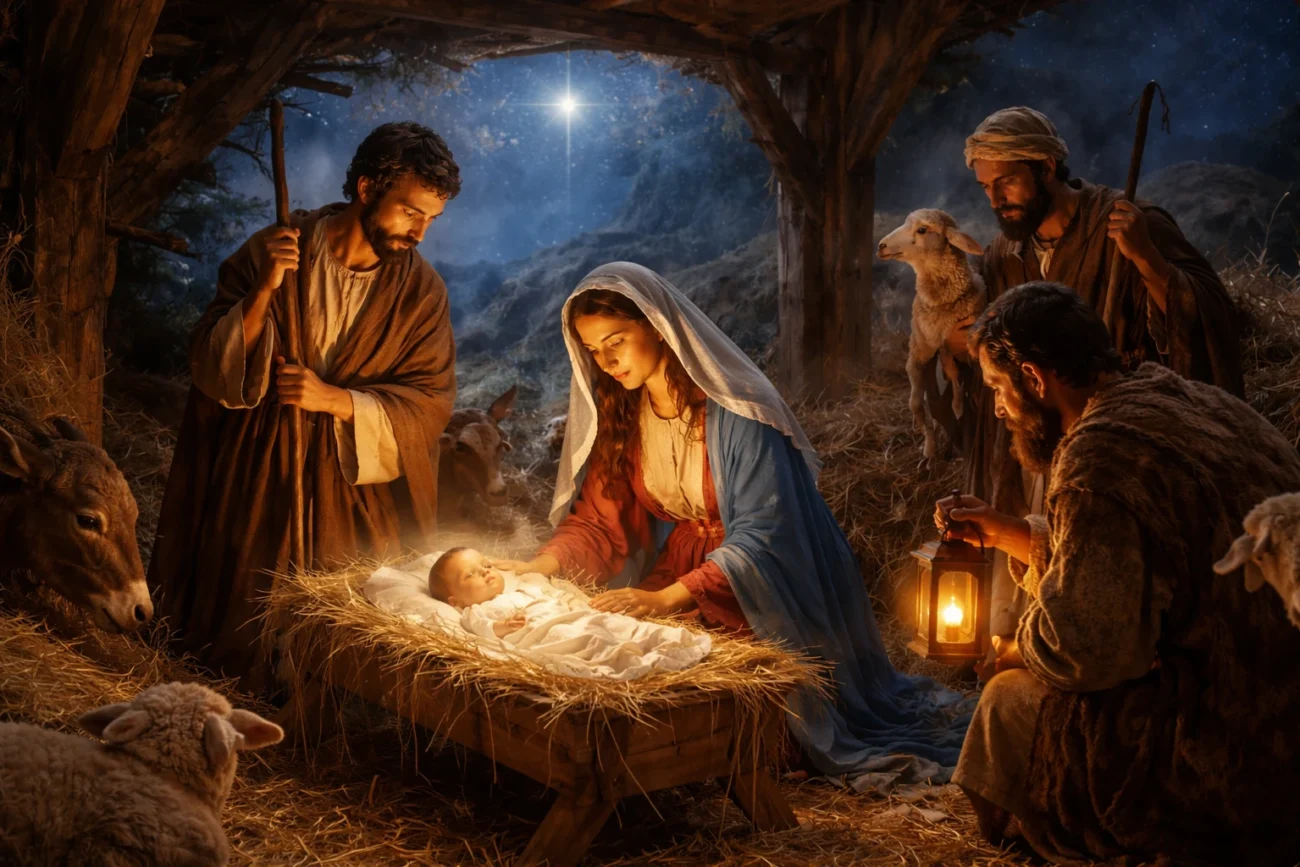
The word “nativität” looks simple at first glance. It’s clearly not English, but it feels familiar, almost like a cousin of “nativity.” That instinct is right. In most cases, when someone searches for “nativität,” they’re trying to understand a German term that points directly to one of the most widely known stories in the world: the birth of Jesus Christ.
But here’s the thing. The word carries more than one meaning, and the story it refers to has layers built over centuries—scripture, tradition, art, and debate all stacked together. What begins as a translation question quickly turns into something larger: a look at how one ancient story became central to Christianity, shaped Christmas, and still raises questions about history and belief.
To understand “nativität” properly, you have to start with the language. Then you have to follow where that language leads.
What “Nativität” Means in English
In modern German, “Nativität” translates directly to “nativity” in English. At its core, the word simply means “birth,” especially in a formal or religious context. In everyday German, people are more likely to use words like Geburt for birth, but Nativität appears in religious, historical, and artistic settings.
In most real-world usage, especially in writing, “Nativität” refers to the Nativity of Jesus, the story of his birth in Bethlehem. That’s why you’ll see it in phrases like Nativität Christi or in the names of churches and artworks tied to Christmas traditions.
There’s another meaning, though less common today. In older texts and in astrology, Nativität can refer to a person’s birth chart or the circumstances of their birth. That usage still exists, but it’s not what most people are looking for when they type the word into a search bar.
So what does this actually mean for readers? It means that while the word itself is neutral, its strongest cultural and historical association is with one specific story.
The Nativity of Jesus: What the Story Says
When people talk about the Nativity, they’re talking about the birth of Jesus as described in the New Testament. But the story most people know—Mary, Joseph, a manger, shepherds, a star, wise men—is not drawn from a single, unified account. It comes from two separate gospels: Matthew and Luke.
Luke’s account is the more detailed of the two. It describes Mary and Joseph traveling to Bethlehem, the birth of Jesus in a setting where there was “no room,” and the presence of shepherds who are told of the birth by angels. This version is the source of the familiar image of a baby laid in a manger.
Matthew tells a different part of the story. It focuses on the visit of the Magi, often called the wise men, who follow a star to find the child. Matthew also includes the story of King Herod, who fears the birth of a rival and orders the killing of infants, leading to the flight of Mary, Joseph, and Jesus into Egypt.
Here’s where it gets interesting. These two accounts overlap on key points—Jesus is born in Bethlehem, his mother is Mary, and his birth is tied to divine intervention—but they differ in tone, detail, and sequence. The version most people picture at Christmas is a blend of both, even though the Bible never presents it as a single scene.
How the Nativity Scene Took Shape
The nativity scene as we know it today did not appear overnight. It developed over centuries as early Christians, artists, and church leaders combined elements from scripture with symbolic additions.
By the Middle Ages, nativity imagery had become central to Christian worship, especially during Christmas. Churches and homes began to display scenes that included not only figures from the gospels but also animals, stable settings, and other details that are not explicitly described in the biblical texts.
A key turning point came in the 13th century with Francis of Assisi, who is often credited with popularizing live nativity displays. These reenactments made the story more immediate and accessible to ordinary people, many of whom could not read the Bible themselves.
Over time, the scene became standardized. Mary and Joseph appear beside the infant Jesus. Shepherds gather nearby. The Magi arrive, sometimes at the same moment, even though the gospel of Matthew suggests their visit happened later. The stable setting, with oxen and donkeys, reflects tradition rather than direct scriptural description.
That familiar image—simple, quiet, almost frozen in time—is the result of centuries of interpretation, not a single written account.
Bethlehem and the Question of History
The Nativity story places Jesus’ birth in Bethlehem, a town with deep symbolic meaning in Jewish tradition. It is associated with King David, and the connection reinforces the idea of Jesus as part of a royal lineage.
But not everyone agrees on how much of the story can be confirmed historically. Historians have long examined details such as the census mentioned in Luke and the timeline of Herod’s reign described in Matthew. These accounts raise questions, especially when compared with known historical records.
There’s a catch, though. The gospels were not written as modern historical reports. They were composed decades after the events they describe and were shaped by theological goals as well as memory and tradition. That makes it difficult to separate what can be verified from what belongs to belief.
Even so, the location itself holds lasting importance. The Church of the Nativity in Bethlehem, built in the 4th century under the Roman emperor Constantine, is widely regarded as one of the oldest continuously used Christian sites in the world. It marks the place where tradition holds that Jesus was born, and it continues to draw pilgrims from across the globe.
Why December 25 Became the Date of the Nativity
The Bible does not give a date for Jesus’ birth. Early Christians did not celebrate it at all in the way it is celebrated today. The choice of December 25 came later, and its origins are still debated.
One explanation links the date to Roman festivals marking the winter solstice, a time associated with the return of light after the darkest days of the year. Early Christians may have adopted or adapted this timing to align with existing cultural practices.
Another explanation comes from early Christian calculations that connected Jesus’ conception with the date of his death, placing his birth nine months later. This approach reflects theological reasoning rather than historical evidence.
So what does this actually mean? It means the date is less about pinpointing a historical moment and more about creating a meaningful place in the calendar. Over time, December 25 became fixed as the celebration of the Nativity, shaping the global holiday now known as Christmas.
The Church of the Nativity and Its Significance
The Church of the Nativity in Bethlehem stands at the center of the story’s physical geography. Originally commissioned in the 4th century, it has survived destruction, reconstruction, and centuries of political change.
Inside the church, a specific site marked by a silver star is identified as the traditional birthplace of Jesus. Whether or not the location can be confirmed with modern historical methods, it has held religious importance for generations.
Pilgrims have visited the site for more than 1,600 years. For many, the journey is not about historical certainty but about connection—to the story, to the place, and to a shared tradition that spans continents and centuries.
That said, the site also reflects the complexity of the region. Control and maintenance of the church are shared among different Christian denominations, and the building itself has been shaped by shifting political and religious dynamics.
The Other Meaning of “Nativität”
While the religious meaning dominates, the word “Nativität” has another layer that still appears in certain contexts. In astrology, it can refer to a person’s birth or the chart that maps the positions of celestial bodies at that moment.
This usage dates back to a time when birth and destiny were closely linked in both scientific and cultural thinking. In older texts, a “Nativität” might describe not just when someone was born, but what their birth was believed to signify.
Today, this meaning is less common in everyday language, especially outside specialized fields. But it remains part of the word’s history and helps explain why the term can feel broader than a single religious story.
Why the Nativity Still Matters
For believers, the Nativity is not just a story but a central moment in Christian faith. It marks the beginning of Jesus’ life on earth and carries theological meaning tied to ideas of incarnation and salvation.
For others, the story holds cultural weight even without religious commitment. It shapes how Christmas is celebrated, how art is created, and how people think about themes like family, poverty, and hope.
Not everyone reads the story the same way. Some see it as literal history, others as symbolic narrative, and still others as a mix of both. That tension has been part of the story for centuries, and it hasn’t gone away.
But the continued presence of the Nativity—in churches, homes, and public spaces—shows how deeply it is woven into shared experience, regardless of belief.
Frequently Asked Questions
What does “nativität” mean in English?
“Nativität” translates to “nativity” in English. It generally refers to birth, but in most cases it points specifically to the birth of Jesus Christ in Christian tradition.
Is “nativität” the same as Christmas?
Not exactly. The Nativity refers to the story of Jesus’ birth, while Christmas is the holiday that celebrates that event. The two are closely linked, but they are not identical.
Where is the Nativity story found in the Bible?
The Nativity story appears in the Gospels of Matthew and Luke. Each account includes different details, and the familiar version combines elements from both.
Why is Jesus said to be born in Bethlehem?
Both Matthew and Luke place Jesus’ birth in Bethlehem, connecting him to the lineage of King David. This detail carries strong symbolic meaning within Jewish and Christian tradition.
What is the Church of the Nativity?
The Church of the Nativity is a historic church in Bethlehem built in the 4th century. It is traditionally considered the site of Jesus’ birth and remains an important place of pilgrimage.
Can “nativität” also mean something outside religion?
Yes. In older usage and in astrology, “Nativität” can refer to a person’s birth or birth chart. This meaning is less common today but still exists in specialized contexts.
Conclusion
“Nativität” begins as a simple word. A translation. A small piece of language that connects German and English. But once you follow it, you end up in one of the most enduring stories in human history.
The Nativity is not just about a birth in Bethlehem. It’s about how that story has been told, retold, shaped, and reshaped over two thousand years. Scripture provides the foundation, but tradition, art, and belief have built the version most people recognize today.
There’s still debate over what can be proven and what belongs to faith. That tension doesn’t weaken the story; if anything, it explains why it continues to hold attention. People return to it not because every detail is settled, but because it raises questions that don’t have easy answers.
In the end, understanding “nativität” means understanding both the word and the world around it. Language opens the door, but the story is what keeps people inside, thinking about what it means and why it has lasted this long.
