Type “lewis center ohio champion trees” into a search bar and you’ll get a mix of half-answers. Some pages hint at towering record-holders tucked into suburban woods. Others drift into vague lists that never quite name a single verified tree. It’s the kind of topic that sounds straightforward until you try to pin it down.
But here’s the thing. “Champion trees” is not a casual label. In Ohio, it’s a formal designation tied to measurements, records, and a statewide registry. Lewis Center, meanwhile, is a fast-growing community just north of Columbus, bordered by parks, preserved land, and suburban development. Put those two ideas together, and the question becomes sharper: are there officially recognized champion trees in Lewis Center itself, or is the story really about the broader region?
The answer requires a closer look at how Ohio defines champion trees, what the official records show, and where someone living in or visiting Lewis Center can actually see the biggest trees in the area.
What a Champion Tree Means in Ohio
A champion tree isn’t just a big tree. It’s a tree that has been measured, documented, and ranked against others of the same species across the state or even the country. Ohio’s system follows a formula used nationwide: trunk circumference in inches, plus height in feet, plus one-quarter of the tree’s average crown spread.
That formula matters because it explains why some trees that look massive don’t qualify. A wide canopy can push a score higher, while a tall but narrow tree might fall short. Every entry in the official registry is backed by measurements taken with care, often by foresters or trained volunteers.
The Ohio Department of Natural Resources (ODNR) maintains the state’s champion tree list, which includes both native and non-native species. The list is not static. Trees die, new ones are discovered, and rankings change over time. Ohio also has a smaller number of national champions—trees that rank as the largest of their species in the entire United States.
So what does this actually mean for a place like Lewis Center? It means that if a tree there were a champion, it would appear in a statewide registry tied to a specific species, a measured score, and a recorded location.
Are There Champion Trees in Lewis Center, Ohio?
This is where expectations and reality part ways a bit. As of the most recent publicly available records, there is no widely documented evidence that Lewis Center itself hosts an officially listed Ohio champion tree.
That doesn’t mean the area lacks impressive trees. It means there is no confirmed entry in the state registry that clearly identifies a champion tree located specifically within Lewis Center’s boundaries. Many of Ohio’s champion trees are scattered across rural properties, older forests, and less-developed parts of the state where trees have had more time to grow undisturbed.
Lewis Center sits in southern Delaware County, a region that has seen significant residential growth over the past few decades. Development tends to limit the presence of extremely old, undisturbed trees. That alone can reduce the odds of finding a state-record specimen right in town.
There’s a catch, though. The absence of a listed champion tree doesn’t mean there aren’t contenders nearby. It may simply mean no one has formally measured and submitted a candidate from that exact location. Champion tree programs depend on nominations, and some large trees go unrecorded for years.
Why the Search Term Keeps Showing Up
If Lewis Center doesn’t clearly appear in official champion tree records, why does the search term exist at all? Part of the answer comes down to how people search and how local content is created.
Residents often combine a place name with a general concept—“champion trees,” “largest trees,” “oldest trees”—hoping to find something close to home. At the same time, many local web pages are built to capture those searches, even if they rely on broad or loosely connected information.
That creates a gray zone. A list of Ohio champion trees might include entries in Delaware County or nearby counties, and those get folded into “Lewis Center” content because the geography overlaps. Over time, the distinction between “in Lewis Center” and “near Lewis Center” starts to blur.
Not everyone agrees on how strict that boundary should be. For a casual visitor, a tree 15 minutes away might feel local. For an official record, the exact coordinates matter.
Where to Find the Biggest Trees Near Lewis Center
Even without a confirmed champion tree inside Lewis Center itself, the surrounding area offers several places where large, mature trees are easier to find. The most important of these is Highbanks Metro Park.
Highbanks Metro Park: The Closest Bet for Big Trees
Highbanks sits right in Lewis Center, stretching along the Olentangy River with deep ravines, wooded slopes, and protected habitat. The park covers thousands of acres, and its terrain includes areas that have avoided heavy disturbance for long periods.
Walk the trails there and you’ll see large sycamores, tall tulip poplars, and mature oaks that stand out against younger growth. These trees may not carry official champion titles, but they represent some of the largest accessible specimens in the immediate area.
The park’s position along a river corridor helps. Floodplains and ravines can create conditions where trees grow taller and wider, especially when development pressure is lower. That’s why Highbanks is often the first place locals mention when the conversation turns to big trees.
Hutchins State Nature Preserve and Nearby Woodlands
Just north of Lewis Center, Hutchins State Nature Preserve protects a small but ecologically rich area with old-growth characteristics. Old-growth in Ohio is rare, and the criteria are strict: trees typically over 150 years old, with dense canopy and minimal disturbance.
Hutchins doesn’t advertise champion trees, but it does offer something just as important for this story—a glimpse of what central Ohio forests looked like before large-scale clearing and development. Trees here may not hold records, but they carry age and structure that are hard to find elsewhere.
Nearby wooded areas in Delaware County and along Alum Creek also provide pockets where large trees can survive. These locations are less about single record-holders and more about overall forest maturity.
Beyond Lewis Center: Expanding the Radius
If someone is willing to drive a bit farther, the odds improve. Champion trees are more likely to be found in less developed counties or in places with long-standing forest protection. Parts of southern Ohio, for example, have a higher concentration of large, old trees.
But that doesn’t make the local search pointless. It just reframes it. Instead of expecting a state champion around every corner, the goal becomes finding the largest and oldest trees within a reasonable distance—and understanding how they fit into the bigger picture.
Champion Trees vs. “Big Trees” in Everyday Language
A key source of confusion is the difference between a champion tree and what most people call a “big tree.” The two ideas overlap, but they’re not the same.
A champion tree is measured, scored, and ranked against others of its species. It holds a formal title, at least temporarily. A big tree, on the other hand, is simply large by local standards. It might be impressive, even extraordinary, but it hasn’t been officially compared or recorded.
Here’s where it gets interesting. Some of the most striking trees in suburban parks are not champions because they face competition from even larger specimens elsewhere in the state. Ohio’s forests vary widely, and certain regions consistently produce larger trees for specific species.
That means a towering oak in Highbanks might still fall short of a champion oak in another county. Without measurement and comparison, it’s impossible to know.
How Trees Become Official Champions in Ohio
The process of naming a champion tree in Ohio is open to the public, but it’s not casual. Anyone can nominate a tree, but the submission must include detailed measurements, photographs, and location information.
Circumference is measured at a standard height above the ground. Height is typically determined using tools like clinometers or laser rangefinders. Crown spread requires measuring the widest part of the canopy and then taking an average.
Once submitted, the tree is reviewed, and if the numbers check out, it may be added to the state list. But that status isn’t permanent. Trees can lose their title if a larger specimen is found or if the tree declines or dies.
So what does this actually mean for Lewis Center? It means the door is open. If a large, unrecognized tree exists in the area, it could become a champion with the right documentation.
Why Central Ohio Doesn’t Have Many Champions
The distribution of champion trees across Ohio isn’t random. Geography, history, and land use all play a role.
Central Ohio, including the Columbus metro area and places like Lewis Center, has experienced extensive development. Large tracts of forest were cleared long ago, and remaining wooded areas are often fragmented. That makes it harder for trees to reach the size needed to compete for champion status.
By contrast, parts of southern and eastern Ohio have more continuous forest cover and less urban pressure. Trees there have had more time and space to grow.
The numbers tell a different story when you compare regions. While central Ohio still supports healthy forests and impressive individual trees, it rarely dominates the champion tree lists.
The Role of Parks and Protected Land
Public parks play a quiet but important role in preserving large trees. Highbanks is a good example, but it’s not unique. Protected land limits development, reduces disturbance, and allows trees to mature.
That said, even protected land doesn’t guarantee champion trees. Age matters, but so do species, soil conditions, and historical use. Some parks were once farmland before being restored, which means their trees are younger than they appear at first glance.
Still, for someone searching for “lewis center ohio champion trees,” parks remain the most accessible place to look. They offer the best chance to see large trees without stepping onto private property.
What You Can Expect to See in Lewis Center Today
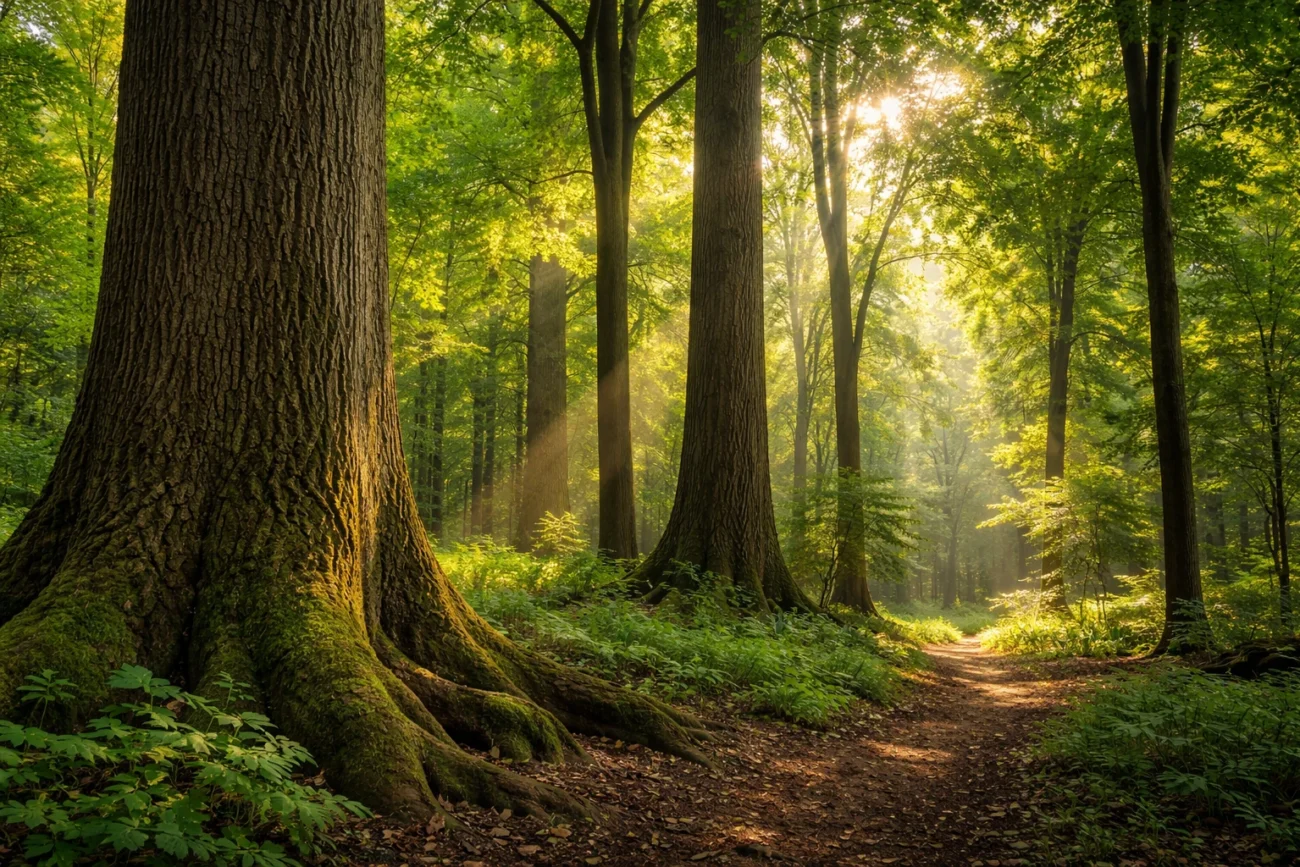
Walk through Lewis Center and its nearby parks, and you won’t find a sign pointing to a state champion tree. What you will find are mature forests, tall riverbank trees, and species that can grow to impressive sizes under the right conditions.
Sycamores along the Olentangy River often stand out with their pale bark and broad trunks. Tulip poplars rise straight and tall, sometimes reaching heights that surprise first-time visitors. White oaks and beech trees add to the mix, each with its own shape and presence.
These trees tell a story of a region in transition. Some are older survivors from before suburban expansion. Others are younger but thriving in protected spaces. Together, they form a living record of how central Ohio’s environment has changed over time.
Frequently Asked Questions About Lewis Center Ohio Champion Trees
Are there any official champion trees in Lewis Center, Ohio?
There is no clear public record confirming an officially listed Ohio champion tree within Lewis Center itself. Most documented champions are located in other parts of the state, often in less developed areas. That said, the absence of a listing doesn’t rule out the possibility of an unrecorded tree in the area.
Where can I see the largest trees near Lewis Center?
Highbanks Metro Park is the most accessible place to find large trees close to Lewis Center. Its river corridors and wooded ravines support mature growth, including tall sycamores, tulip poplars, and oaks. Nearby preserves and parks in Delaware County also offer good opportunities.
What qualifies a tree as a champion in Ohio?
A champion tree is the largest known specimen of its species based on a scoring system that combines trunk circumference, height, and crown spread. The tree must be measured and submitted to the Ohio Department of Natural Resources for verification.
Can a tree in a local park become a champion tree?
Yes, if it meets the size criteria and is properly measured and submitted. Many champion trees are on private land, but public park trees can qualify as well. The key is accurate measurement and documentation.
Why aren’t there more champion trees in central Ohio?
Development has reduced the number of very old, undisturbed trees in central Ohio. Regions with larger, continuous forests tend to produce more champion trees because trees have more time and space to grow.
How can I nominate a tree in Ohio?
Anyone can submit a nomination by measuring the tree’s circumference, height, and crown spread, then providing that information along with photos and location details to ODNR. If the tree ranks highest for its species, it can be added to the state list.
Conclusion
The search for “lewis center ohio champion trees” leads to a simple but revealing answer. There’s no strong evidence that Lewis Center itself hosts an officially recognized champion tree, at least not in the current public record. But the story doesn’t end there.
What Lewis Center does offer is access to some of the best remaining woodland in central Ohio. Highbanks Metro Park and nearby preserves give residents and visitors a chance to see large, healthy trees in a landscape that has otherwise changed quickly over the past few decades. These trees may not carry official titles, but they still matter.
That said, the possibility remains open. Champion trees are discovered, measured, and recorded over time. A tree growing quietly along a riverbank today could become tomorrow’s record-holder if someone takes the time to document it.
So the better question may not be whether Lewis Center has champion trees right now. It’s whether the next one is already standing there, waiting to be noticed.
