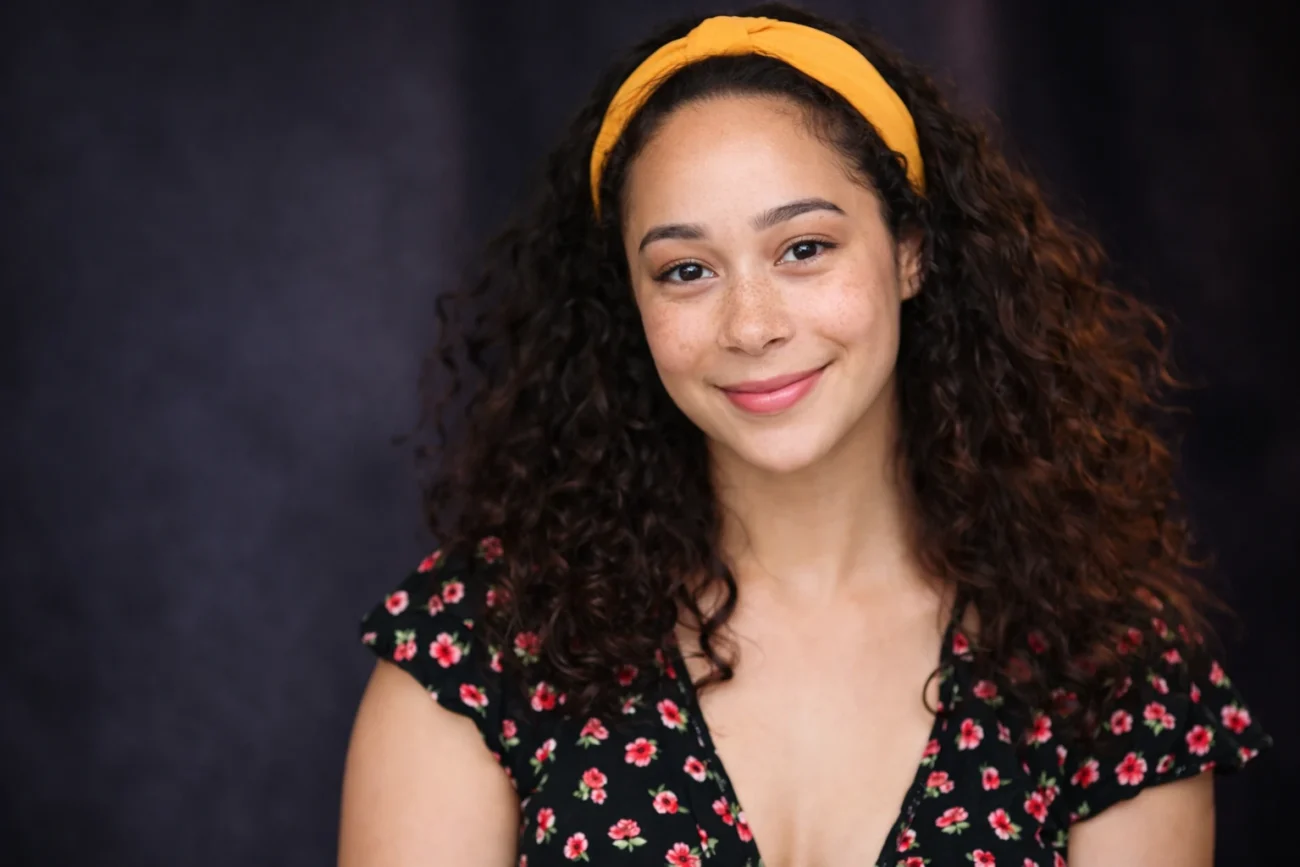
There are names that surface again and again in search bars, often carrying more than one story. Jasmine Williams is one of those names. But the Jasmine Williams who has steadily built a reputation in performance and spoken word comes into focus once you follow the thread of her work—on stage, on screen, and in the spaces where storytelling feels immediate and personal.
She isn’t a household name in the traditional sense, at least not yet. Still, her path reflects something more grounded and, in many ways, more telling about modern creative life. Her work moves between acting and poetry, between scripted roles and live performance, shaped by a voice that developed long before casting calls or television credits.
Early Life and Family
Jasmine Williams was raised in South Central Los Angeles, a place that has produced generations of artists who turn lived experience into expression. Growing up in a community often defined by outsiders through headlines, she developed an early awareness of storytelling—who gets to tell it, and how it gets told.
Her childhood wasn’t marked by instant access to the entertainment industry, but it was filled with exposure to culture in its rawest forms. Neighborhood gatherings, spoken word events, and the rhythms of everyday conversation played a role in shaping how she listened and how she spoke. The truth is, that environment can be as much a classroom as any formal institution.
Family life remained largely private, but what is clear is that her upbringing instilled both resilience and a sense of observation. Those two qualities tend to show up later in her work, especially in her poetry, where personal reflection and social awareness often meet. Not many people know this, but artists who begin in spoken word frequently carry those roots into every performance that follows.
Education and First Ambitions
Williams took a decisive step toward her creative ambitions when she enrolled at San Francisco State University. There, she studied Dramatic Arts and Playwriting, a combination that suggests she was interested not just in performing stories but in constructing them.
College offered her both technical training and exposure to a broader creative community. San Francisco, with its long history of activism and performance art, provided a different backdrop from Los Angeles. It expanded her perspective while reinforcing the instincts she had developed growing up.
Here’s where it gets interesting. Many actors follow a linear path—auditions, roles, incremental progress—but Williams maintained a dual focus. She didn’t separate acting from writing; instead, she treated them as connected disciplines. That approach would later define her work and set her apart from performers who rely solely on scripted material.
Finding Her Voice in Spoken Word
Before television roles entered the picture, Williams was already making a name for herself in spoken word circles. She became associated with Da Poetry Lounge, one of Los Angeles’ most respected platforms for live poetry.
Spoken word isn’t an easy space to break into. It demands immediacy, honesty, and the ability to hold an audience without the support of a script or ensemble cast. Williams developed a presence that combined clarity with emotional depth, drawing from personal experience while connecting to broader themes.
Her performances began to reach beyond local audiences. Appearances tied to networks such as HBO, TV One, and digital platforms like All Def Digital helped bring her work to wider attention. That exposure didn’t come overnight; it was the result of years spent refining her craft in front of live audiences who respond in real time.
But here’s the thing. Spoken word doesn’t always translate neatly into mainstream recognition. Many talented poets remain known primarily within their communities. Williams, however, used that foundation as a springboard rather than a destination.
Transition Into Acting
Williams’ move into acting felt like a natural extension of her earlier work rather than a departure from it. The skills required—timing, emotional range, and presence—were already part of her toolkit. What changed was the format and the scale.
She began appearing in television roles, building a portfolio that included parts in series such as S.W.A.T., Shrinking, and Not Dead Yet. These roles, while not always leading parts, placed her within established productions and introduced her to broader audiences.
Acting in television comes with its own demands. It requires adaptability, the ability to step into different characters quickly, and the discipline to work within a collaborative environment. Williams approached it with the same focus she had shown in spoken word, treating each role as an opportunity to deepen her range.
The numbers tell a different story when you look at careers like hers. Success isn’t always measured in headline roles or awards. It often appears in steady work, growing recognition, and the respect of peers within the industry.
Balancing Two Creative Worlds
Maintaining a presence in both spoken word and acting isn’t easy. Each demands time, energy, and a different kind of preparation. Williams has continued to move between the two, refusing to limit herself to a single lane.
That decision reflects a broader shift in how artists build careers today. The old model—choose one path and stick to it—doesn’t always apply. Williams represents a generation of creatives who adapt, who move between mediums without losing their voice.
Her poetry informs her acting, giving her performances a sense of authenticity that audiences can feel, even if they can’t immediately identify why. At the same time, her acting experience sharpens her delivery in live settings, where pacing and timing can make or break a performance.
There’s a catch, though. Working across disciplines can sometimes make it harder to define a public identity. Audiences often prefer clear labels—actor, poet, writer—but Williams resists that kind of simplification.
Public Recognition and Industry Presence
While she hasn’t reached the level of mainstream celebrity, Williams has built a reputation within the circles that matter to her work. Casting directors, fellow performers, and audiences familiar with spoken word recognize her consistency and growth.
Her appearances on television have helped expand that recognition. Even smaller roles can have a significant impact when they place an actor within widely viewed productions. Over time, these appearances contribute to a body of work that becomes harder to overlook.
What’s surprising is how often careers like hers develop quietly. There’s no single breakthrough moment, no overnight transformation. Instead, there’s a steady accumulation of experience, each project adding another layer.
That kind of trajectory doesn’t always generate headlines, but it often leads to longevity. And in an industry known for its unpredictability, longevity can be one of the most meaningful markers of success.
Personal Life and Privacy
Williams has kept much of her personal life out of the public eye. That choice is increasingly common among performers who prefer to let their work speak for itself.
There are no widely reported details about her relationships or family life beyond what she has chosen to share in her creative work. That absence of information isn’t unusual; it reflects a deliberate boundary between public and private identity.
The truth is, not every biography needs to fill in every personal detail. In Williams’ case, the focus remains on her work and the path she has taken to build her career. That focus aligns with the tone of her public presence, which emphasizes craft over celebrity.
Recent Work and Current Direction
In recent years, Williams has continued to expand her acting portfolio while maintaining her connection to spoken word. Her television appearances have placed her in projects that reach wide audiences, even as she remains connected to the performance spaces that shaped her early career.
Her ongoing involvement in creative communities suggests that she sees her career as a long-term process rather than a series of short-term milestones. That perspective can make a difference in how an artist navigates opportunities and setbacks.
So what does this actually mean for her future? It points to a career that may continue to evolve across multiple platforms. As streaming services and digital media reshape the entertainment industry, artists who can adapt—who can write, perform, and connect directly with audiences—are often the ones who find lasting opportunities.
Williams appears to be positioned within that group. Her background gives her flexibility, and her experience provides a foundation she can build on.
Lesser-Known Details
Not many people know this, but Williams’ training in playwriting has influenced how she approaches both poetry and acting. Understanding structure, pacing, and dialogue gives her an advantage that isn’t always visible on the surface.
Her connection to Da Poetry Lounge also places her within a lineage of performers who have gone on to achieve wider recognition. That space has long served as a proving ground for artists willing to test their work in front of demanding audiences.
Another detail that stands out is her ability to move between intimate performance settings and larger productions. That range isn’t guaranteed; it requires both confidence and adaptability. Williams has shown both, even as her career continues to develop.
Frequently Asked Questions
FAQ
Who is Jasmine Williams?
Jasmine Williams is an American actress and spoken word poet known for her work in television and live performance. She has appeared in series such as S.W.A.T., Shrinking, and Not Dead Yet. Alongside her acting, she has built a reputation in spoken word communities, particularly through platforms like Da Poetry Lounge. Her career reflects a blend of performance disciplines rather than a single defined path.
Where is Jasmine Williams from?
She was raised in South Central Los Angeles, an area that has influenced many aspects of her creative voice. Growing up there exposed her to a wide range of cultural and social experiences that often inform her work. That background continues to shape how she approaches storytelling. It’s a key part of understanding her artistic perspective.
What is Jasmine Williams known for?
Williams is known for her dual career as an actress and spoken word artist. Her television roles have introduced her to wider audiences, while her live performances have established her within poetry communities. She is also recognized for her connection to Da Poetry Lounge. Together, these elements define her public identity.
Did Jasmine Williams study acting?
Yes, she studied Dramatic Arts and Playwriting at San Francisco State University. Her education provided formal training in both performance and writing. This combination has influenced how she approaches her career. It allows her to engage with storytelling from multiple angles.
Is Jasmine Williams active today?
As of recent years, Williams remains active in both acting and spoken word performance. She continues to appear in television projects while maintaining her presence in creative communities. Her work suggests an ongoing commitment to developing her craft. There are no indications that she has stepped away from her career.
Conclusion
Jasmine Williams’ story doesn’t follow a single, dramatic arc. Instead, it unfolds through a series of steady choices, each one building on the last. From South Central Los Angeles to San Francisco and back into the broader entertainment world, her path reflects persistence more than sudden transformation.
Her work in spoken word gave her a foundation that many actors don’t have. It taught her how to hold attention, how to communicate clearly, and how to connect with audiences in real time. Those skills continue to shape her performances, even as she moves through different roles and projects.
There’s a quiet confidence in the way her career has developed. She hasn’t rushed to define herself in narrow terms, and she hasn’t abandoned the spaces that first supported her work. That balance can be difficult to maintain, but it has become a defining feature of her journey.
Looking ahead, her trajectory suggests continued growth rather than a fixed endpoint. As the entertainment industry continues to change, artists like Williams—adaptable, grounded, and committed to their craft—often find new ways to move forward. Her story is still being written, and that may be the most compelling part of it.
