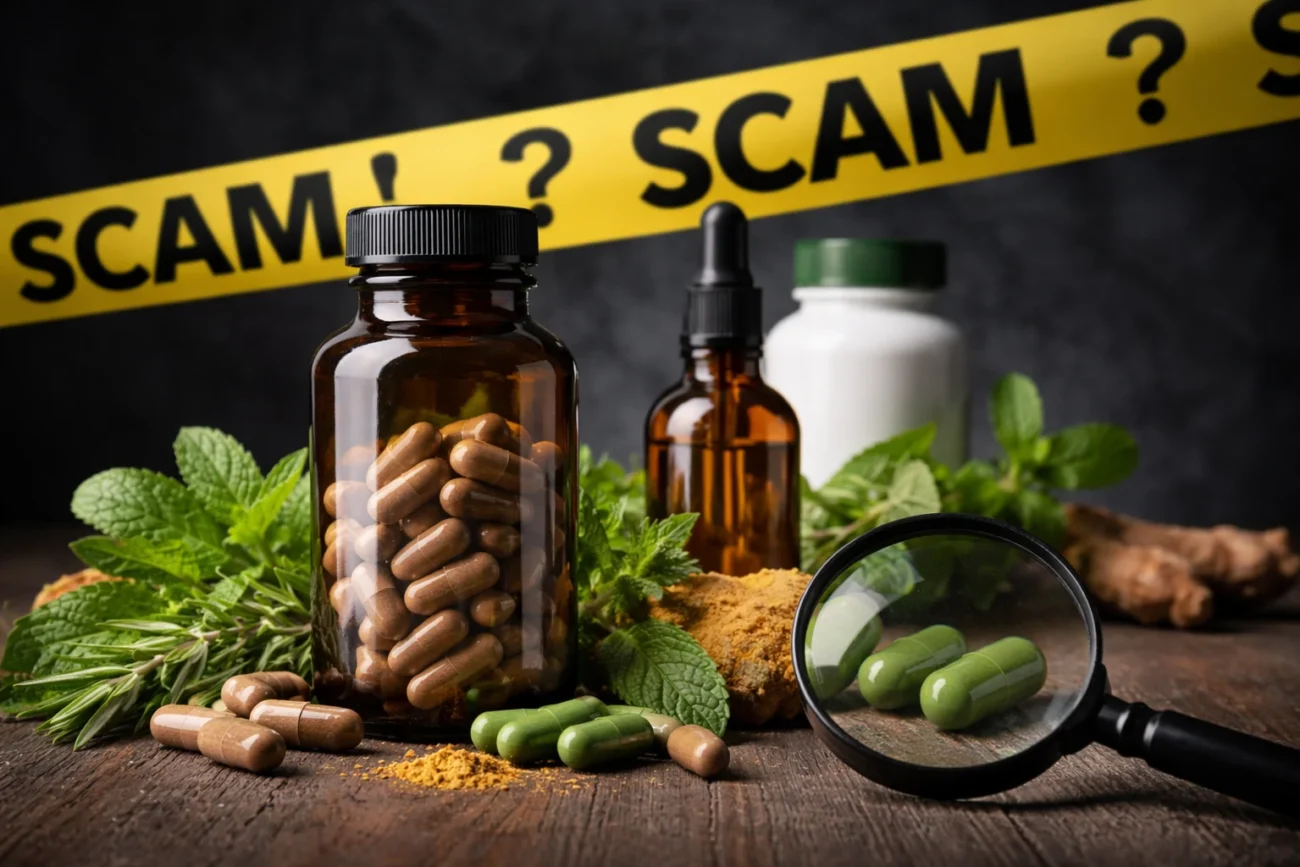
Search for “herbciepscam” and you’ll land on a strange corner of the internet. A handful of articles, all recent, all sounding similar, all warning about a possible scam tied to herbal supplements. But there’s an immediate problem. None of them clearly point to a specific company, product, or confirmed investigation.
That raises a simple but important question. Is “herbciepscam” the name of a real scam, or is it something else entirely?
The answer is less straightforward than people expect. And that’s exactly why the term keeps spreading.
What “Herbciepscam” Actually Refers To
At first glance, “herbciepscam” looks like the name of a brand caught in wrongdoing. But there’s no solid evidence tying it to a registered company, a known supplement product, or a formal case filed by regulators. There’s no clear paper trail, no court record, no official warning that uses that exact term.
Instead, what you’re seeing is a label that appears to have grown out of online suspicion. People who encounter questionable supplement ads or unfamiliar checkout pages often search for phrases like “is this a scam” or attach the word “scam” to whatever name they’ve seen. Over time, those searches can take on a life of their own.
Here’s where it gets interesting. Many of the pages explaining “herbciepscam” don’t cite original reporting or real complaints tied to a specific seller. They often repeat the same general points about herbal supplement fraud without naming a concrete operator. That suggests the term may function more as a catch-all warning than a documented case.
So what does this actually mean? It means the real story isn’t about a single exposed scheme. It’s about how online supplement scams work and why vague terms like this gain traction.
Why This Keyword Keeps Showing Up
Search behavior tells its own story. When people feel unsure about a purchase, they don’t always know what to type. They might remember part of a brand name, or they might not trust what they saw in the first place. So they search combinations like “herb supplement scam,” “herb cieps scam,” or “is this herbal product legit.”
Those searches get picked up by content sites, which publish articles trying to answer them. Once a phrase like “herbciepscam” appears in enough places, it starts ranking in search engines. That creates a feedback loop. More people see it, search it, and assume it refers to something specific.
But the lack of detail matters. A real, investigated scam usually leaves a trail. You’ll see named companies, lawsuits, enforcement actions, or at least consistent consumer complaints tied to the same source. With “herbciepscam,” that pattern is missing or unclear.
That doesn’t mean there’s no risk. It means the risk is broader than one name.
How Herbal Supplement Scams Usually Work
To understand why people are worried, you need to look at how these schemes typically operate. They follow a pattern that’s been documented for years by consumer protection agencies.
A common entry point is a slick advertisement. It might promise rapid weight loss, sharper memory, or relief from chronic conditions. The language often sounds scientific, but the claims are exaggerated or unsupported. Some ads mimic news articles or use fake endorsements to build trust.
Once someone clicks through, they land on a sales page that creates urgency. Limited-time offers, countdown timers, or claims that supplies are running out. The goal is to push a quick decision. The product itself may be described as “natural,” which can make it seem safe even when there’s little transparency about ingredients.
There’s a catch, though. Many of these offers are tied to subscription billing. A “free trial” turns into recurring charges that are difficult to cancel. Customers might not realize they’ve signed up for ongoing payments until they see multiple charges on their bank statement.
In other cases, the product that arrives doesn’t match the claims at all. It may be ineffective, mislabeled, or sourced from unknown manufacturers. Refund processes, if they exist, are often frustrating or deliberately slow.
The Health Risks People Often Overlook
Most scam discussions focus on money. That’s understandable. But with herbal supplements, there’s another layer that matters just as much.
Not all supplements are harmless. Some products sold online have been found to contain undeclared pharmaceutical ingredients. Others may interact with prescription medications in ways that aren’t obvious to the average buyer. The term “natural” doesn’t guarantee safety.
Regulatory bodies have warned for years about products marketed as miracle cures. These claims are a red flag. If a supplement promises to treat or cure a serious disease, it’s stepping into territory that requires medical evidence and approval, not just marketing copy.
There’s also the issue of quality control. Reputable manufacturers test for contaminants and verify ingredient levels. Questionable sellers often don’t provide that information. Without it, consumers are left guessing what they’re actually taking.
So when someone searches “herbciepscam,” they may be thinking about fraud. But the underlying risk can be broader than that.
Red Flags That Signal a Problem
Spotting a suspicious supplement offer doesn’t require expert knowledge. Certain patterns show up again and again.
One of the clearest warning signs is a claim that sounds too good to be true. Rapid results, guaranteed outcomes, or promises to cure complex conditions should raise immediate doubt. Legitimate health products don’t make sweeping claims without evidence.
Another sign is a lack of transparency. If a website doesn’t clearly list the company’s physical address, contact information, or detailed ingredient list, that’s a problem. So is a refund policy that’s vague or hard to find.
Payment methods can also reveal a lot. Sites that push for quick card entry without giving time to review terms often rely on impulse decisions. Hidden subscription terms are especially common, buried in fine print that most people don’t read.
Customer reviews deserve a closer look too. Fake reviews tend to be overly positive and repetitive. Independent platforms, where users can post both good and bad experiences, offer a more reliable picture.
What To Do If You’ve Already Made a Purchase
Realizing you may have fallen into a questionable offer can feel frustrating. But acting quickly can limit the damage.
The first step is to check your payment history. Look for any recurring charges you didn’t expect. If you see them, contact your bank or card provider right away. They can often block further charges and may help recover funds, depending on the situation.
Saving evidence matters. Screenshots of the website, order confirmation emails, and any communication with the seller can support your case if you file a dispute. Even small details can help establish what was promised versus what was delivered.
Reporting the issue can also make a difference. Consumer protection agencies track complaints to identify patterns. While one report may not trigger action, many reports can lead to investigations.
That said, outcomes vary. Not every complaint leads to a refund or enforcement action. But taking these steps gives you the best chance of resolving the issue.
How To Check a Supplement Before Buying
Avoiding problems is easier than fixing them. A few simple checks can go a long way.
Start by looking up the company behind the product. A legitimate business should have a clear presence, including registration details and consistent contact information. If you can’t find basic facts about the seller, that’s a warning sign.
Next, look beyond the seller’s own website. Independent reviews, discussion forums, and consumer complaint boards can reveal patterns that marketing pages won’t show. Pay attention to repeated complaints about billing, delivery, or product quality.
Ingredient transparency is another key factor. Reputable products list their components clearly and often provide information about sourcing and testing. Vague descriptions like “proprietary blend” without specifics make it harder to assess what you’re buying.
Finally, take a step back before entering payment details. Urgency is a common tactic in scams. If a deal seems to disappear the moment you hesitate, that’s a signal to slow down, not speed up.
Why Terms Like “Herbciepscam” Spread So Fast
There’s a broader pattern behind this keyword. The internet doesn’t always produce clean, verified labels for suspicious activity. Instead, it creates shorthand phrases that reflect how people search.
When enough users start typing a similar phrase, content follows. Articles appear, often repeating each other, and the term gains visibility. Over time, it can look like a defined case even when it isn’t.
Not everyone agrees on what that means. Some see it as a useful warning signal, a way for people to flag something that feels off. Others see it as noise, a sign that low-quality content is shaping search results more than real reporting.
The truth sits somewhere in between. The term “herbciepscam” may not point to a single, proven scam. But it does point to a real concern. People are encountering questionable supplement offers and trying to make sense of them.
Frequently Asked Questions
Frequently Asked Questions About Herbciepscam
Is herbciepscam a real scam?
There’s no clear evidence that “herbciepscam” refers to a single confirmed scam involving a specific company. It appears to be a general label people use when they suspect an herbal supplement offer is fraudulent. That doesn’t mean the risk is fake, only that the term itself isn’t tied to a verified case.
Is Herbciep a real company?
Public records and widely available sources do not clearly identify a well-documented company operating under the name “Herbciep.” If a seller is using that name, it should be verified carefully before making any purchase.
How can I tell if an herbal supplement website is a scam?
Look for exaggerated health claims, missing company details, unclear ingredient information, and hidden subscription terms. If the site pressures you to act quickly or lacks independent reviews, it’s worth stepping back and checking further.
Can fake herbal supplements be dangerous?
Yes, they can. Some products may contain undeclared ingredients or interact with medications. Even if a product is marketed as natural, that doesn’t guarantee it’s safe or properly tested.
What should I do if I was charged after a free trial?
Contact your bank or card provider as soon as possible to block further charges and dispute the transaction. Keep records of your purchase and any communication with the seller, as these can support your claim.
Where can I report a suspected supplement scam?
You can report concerns to consumer protection agencies in your country, as well as health regulators that oversee supplements. These reports help track patterns and can lead to further investigation.
Conclusion
The phrase “herbciepscam” doesn’t point to a single headline-making fraud. It points to something messier. A mix of real consumer concern, unclear search behavior, and a growing body of online content trying to explain both.
But here’s the thing. The absence of a named, proven case doesn’t mean the risk isn’t real. Herbal supplement scams, misleading claims, and subscription traps are well documented. People encounter them every day, often through ads that look more credible than they are.
So what does this actually mean for someone searching the term? It means you should treat it as a signal, not a conclusion. A signal that it’s time to slow down, check the details, and question what’s being offered. The label itself may be vague, but the warning behind it is not.
In the end, the safest approach isn’t to rely on a single keyword. It’s to build a habit of checking sources, reading beyond marketing claims, and paying attention to how a product is sold. That’s what separates a quick mistake from an informed decision.
