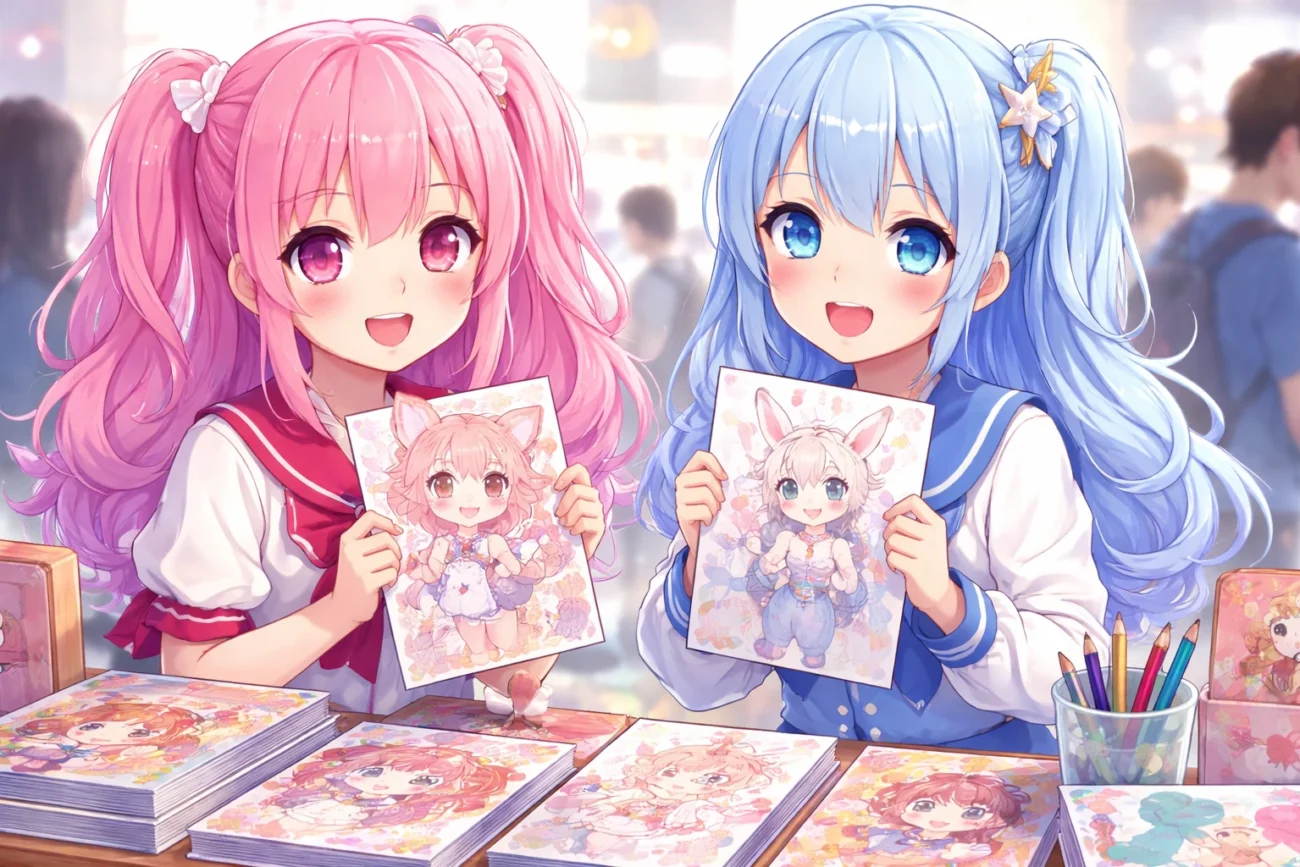
Type “doujen moe” into a search bar and you’ll get a flood of confident explanations. Most promise a neat definition, often packaged as a trend or a niche within anime culture. But sit with it for a minute, and something feels off. The phrase shows up in English-language content far more than in established Japanese sources, and its meaning shifts depending on who’s writing about it.
But here’s the thing. “Doujen moe” doesn’t have a long, stable history as a standalone term. What it does have are roots—two well-documented ideas from Japanese fan culture that have been fused together, sometimes loosely, sometimes carelessly. To understand what people mean when they search for it, you have to step back and look at those roots: doujin and moe.
Once you do that, the picture becomes clearer. It’s less about a single defined category and more about how online culture repackages older concepts into new labels, especially for search traffic. That doesn’t make the term useless. It just means the real story sits underneath it.
What “Doujen Moe” Seems to Mean
Start with the simplest answer. When people use “doujen moe,” they are usually referring to fan-made or independent anime-style content that emphasizes “moe” appeal—that specific kind of emotional attachment to fictional characters often associated with cuteness, vulnerability, or charm.
That definition works on a surface level. It’s easy to understand, and it lines up with how the phrase is used across blogs and explainers. But it also glosses over an important detail: the spelling itself. “Doujen” is widely seen as a misspelling or variant of “doujin,” a Japanese word with a clear meaning and history.
So what does this actually mean? It means the phrase people are searching for is built on real concepts, but the label itself isn’t something you’ll find in traditional fan discourse, academic writing, or Japanese-language sources in the same way. It’s a hybrid term, shaped more by the English-language internet than by the culture it references.
To understand it properly, you have to unpack both halves.
The Meaning of Doujin and Why It Matters
“Doujin” (同人) literally refers to people who share the same interests. In practice, it’s shorthand for independent, self-published creative work, especially in manga, novels, and games. The most visible form is doujinshi, which are fan-made comics often based on existing characters or worlds.
This isn’t a fringe activity. It’s a massive parallel ecosystem that has existed for decades. The most famous event tied to it is Comiket, short for Comic Market, which started in Tokyo in 1975. What began as a small gathering of fans trading handmade comics has grown into one of the largest fan conventions in the world, drawing hundreds of thousands of attendees.
Doujinshi can range from parody to homage to completely original work. Some are amateur projects; others are polished enough to rival professional publications. Many well-known manga artists started out in this space, using it as a way to experiment outside commercial constraints.
There’s also a legal gray area. Much of doujinshi culture involves using characters or settings from existing works, which would raise copyright issues in many countries. In Japan, enforcement tends to be complaint-driven, and rights holders often tolerate fan works as long as they don’t compete directly with the original. That tolerance has helped doujin culture thrive, even as it operates in a delicate balance.
So when someone says “doujen,” they’re almost certainly pointing—intentionally or not—to this entire ecosystem of fan-driven creativity.
What Moe Actually Describes in Anime Culture
“Moe” is harder to pin down, and that’s part of the reason it gets misunderstood. The word became common in the early 1990s among anime and manga fans, but its meaning has never been fixed. At its core, it describes a strong emotional response toward a character, often tied to traits like innocence, shyness, or endearing awkwardness.
It’s tempting to reduce moe to “cute,” but that misses the point. Moe is less about how a character looks and more about how they make the audience feel. It’s a kind of affection that can border on protectiveness, nostalgia, or even longing. Different fans interpret it differently, and debates about its meaning have been part of anime discourse for years.
Some critics argue that moe reduces characters to a set of appealing traits. Others see it as a legitimate emotional connection between audience and fiction. Not everyone agrees, and that disagreement is part of what keeps the term alive.
Here’s where it gets interesting. Moe isn’t limited to official media. It shows up just as strongly—sometimes more strongly—in fan-made content, where creators have the freedom to exaggerate or reinterpret character traits without studio constraints.
That’s where the connection to doujin culture becomes obvious.
Where the Two Ideas Overlap
Put “doujin” and “moe” together, and you get something fairly intuitive: fan-created works that emphasize emotional attachment to characters. These might include alternate storylines, character-focused vignettes, or reinterpretations that highlight traits fans already love.
In practice, this kind of content has existed for years without needing a special label. Artists and writers in the doujin scene have long created works that focus on character relationships, personality quirks, and emotional beats. Moe elements often come naturally in that process, especially in genres that prioritize character over plot.
But here’s the catch. Calling all of that “doujen moe” risks flattening a complex culture into a simple keyword. It suggests a defined category where, in reality, there’s a spectrum of styles, intentions, and audiences.
That doesn’t mean the term is useless. It just means it works better as a descriptive shortcut than as a formal label.
Why the Term Is Showing Up More Often Online
If “doujen moe” isn’t a long-established concept, why does it appear so often in search results?
The answer has less to do with fandom and more to do with how content is produced on the internet. Over the past few years, there’s been a noticeable rise in articles built around niche or semi-niche keywords. Many of these combine recognizable terms into new phrases that sound specific enough to attract clicks.
“Doujen moe” fits that pattern. It uses two real concepts—doujin and moe—but packages them in a way that feels fresh or unexplored. That makes it attractive for search-driven content, even if the underlying idea isn’t new.
The numbers tell a different story, though. When you look at established discussions of anime culture, you’ll find extensive writing on doujinshi and moe separately, but very little that treats “doujen moe” as a distinct category with its own history.
That gap matters. It means readers should approach the term with some caution, recognizing that it may reflect how the internet organizes information rather than how the culture itself does.
How Fans Actually Encounter This Kind of Content
For most people, the idea behind “doujen moe” isn’t something they search for first. It’s something they stumble into. It might be through fan art on platforms like Pixiv, self-published comics at conventions, or online communities sharing reinterpretations of favorite characters.
At events like Comiket, entire sections are dedicated to works that revolve around specific characters or relationships. Some focus on humor, others on romance, and many on emotional storytelling. Moe elements often appear in how characters are portrayed—slightly softer, more vulnerable, or more expressive than in official material.
Online, tagging systems play a big role. Artists and writers use keywords to describe tone, themes, or character traits. Over time, those tags can evolve into search terms, even if they weren’t originally meant to define a category.
That’s likely part of how phrases like “doujen moe” gain traction. They emerge from a mix of translation, interpretation, and algorithm-driven visibility.
The Legal and Cultural Gray Area
Any discussion of doujin culture has to address the legal context, even briefly. Many doujinshi works are based on existing intellectual property, which raises questions about copyright. In Japan, the system is unusual. Enforcement tends to depend on whether rights holders choose to act, and many tolerate fan works as long as they don’t harm the original brand.
This arrangement isn’t written into law in a simple way. It’s more of a long-standing understanding between creators, publishers, and fans. That understanding has allowed a huge amount of creative output to flourish, but it also creates uncertainty.
For readers outside Japan, it’s easy to misinterpret this as a free-for-all. It’s not. There are boundaries, and they can shift depending on the situation. Anyone engaging with doujin culture—whether as a creator or consumer—needs to be aware of that context.
Why Definitions Matter More Than They Seem
It might sound like splitting hairs to question a term like “doujen moe.” After all, if people understand what it roughly means, does it really matter how precise the label is?
In one sense, no. Language changes all the time, and new phrases emerge as communities grow and shift. But there’s a difference between organic change and confusion created by repetition. When a term spreads without a clear foundation, it can blur the lines between established concepts and invented ones.
That matters for readers who want to understand the culture, not just skim it. It also matters for creators, whose work can be flattened into categories that don’t quite fit what they’re doing.
So what does this actually mean? It means taking an extra moment to look past the keyword and ask what’s really being described.
Frequently Asked Questions
Frequently Asked Questions
What does “doujen moe” mean?
“Doujen moe” is generally used to describe fan-made or independent anime-style content that emphasizes emotional attachment to characters, often associated with cuteness or charm. The term itself appears to be a variation or misspelling of “doujin moe,” and it doesn’t have a long, established history as a formal category.
Is “doujen moe” the same as “doujin moe”?
In most cases, yes. “Doujen” is widely seen as an alternate spelling of “doujin,” which refers to independent or self-published works. The difference is more about spelling and usage than meaning, with “doujin” being the correct and widely recognized term.
What is the difference between doujinshi and moe?
Doujinshi refers to self-published works, often created by fans and sometimes based on existing characters or stories. Moe, on the other hand, describes an emotional response to fictional characters, usually tied to affection or attachment. One is a type of content, and the other is a way of experiencing or interpreting that content.
Is “doujen moe” an official Japanese term?
No, there is little evidence that “doujen moe” is used as an official or widely recognized term in Japanese-language sources. It appears more often in English-language content, likely as a combination of existing concepts rather than a standalone category.
Is doujinshi legal?
Doujinshi exists in a complex legal space. Many works are based on existing intellectual property, which can raise copyright concerns. In Japan, enforcement often depends on whether rights holders choose to take action, and many tolerate fan works under certain conditions.
Where can beginners learn more about doujin and moe?
A good starting point is to look at established discussions of doujinshi culture and moe within anime and manga communities. Conventions like Comiket, as well as online platforms that host fan art and comics, provide real-world examples of how these ideas play out in practice.
Conclusion
“Doujen moe” looks like a neat label at first glance, the kind of term that promises a clear definition and a tidy corner of internet culture. But the closer you look, the more it unravels. What people are really pointing to isn’t a new category but a combination of older ideas that have been circulating in anime fandom for decades.
That doesn’t make the search meaningless. It just shifts the focus. Instead of asking what “doujen moe” is as a standalone concept, it makes more sense to ask how doujin culture and moe aesthetics intersect, and why that intersection keeps resurfacing under different names.
There’s also a broader takeaway here. Online language moves fast, and not every term that gains traction comes with a solid foundation. Some are built from translation quirks, others from search trends, and many from a mix of both. The result can be confusing, especially for readers trying to get a clear picture of a culture that already has its own vocabulary.
If you’re coming to this topic for the first time, the best move is simple: follow the roots. Learn what doujinshi is, understand what moe means, and pay attention to how fans actually use those ideas. The rest—the labels, the variations, the shifting keywords—will make a lot more sense once you do.
