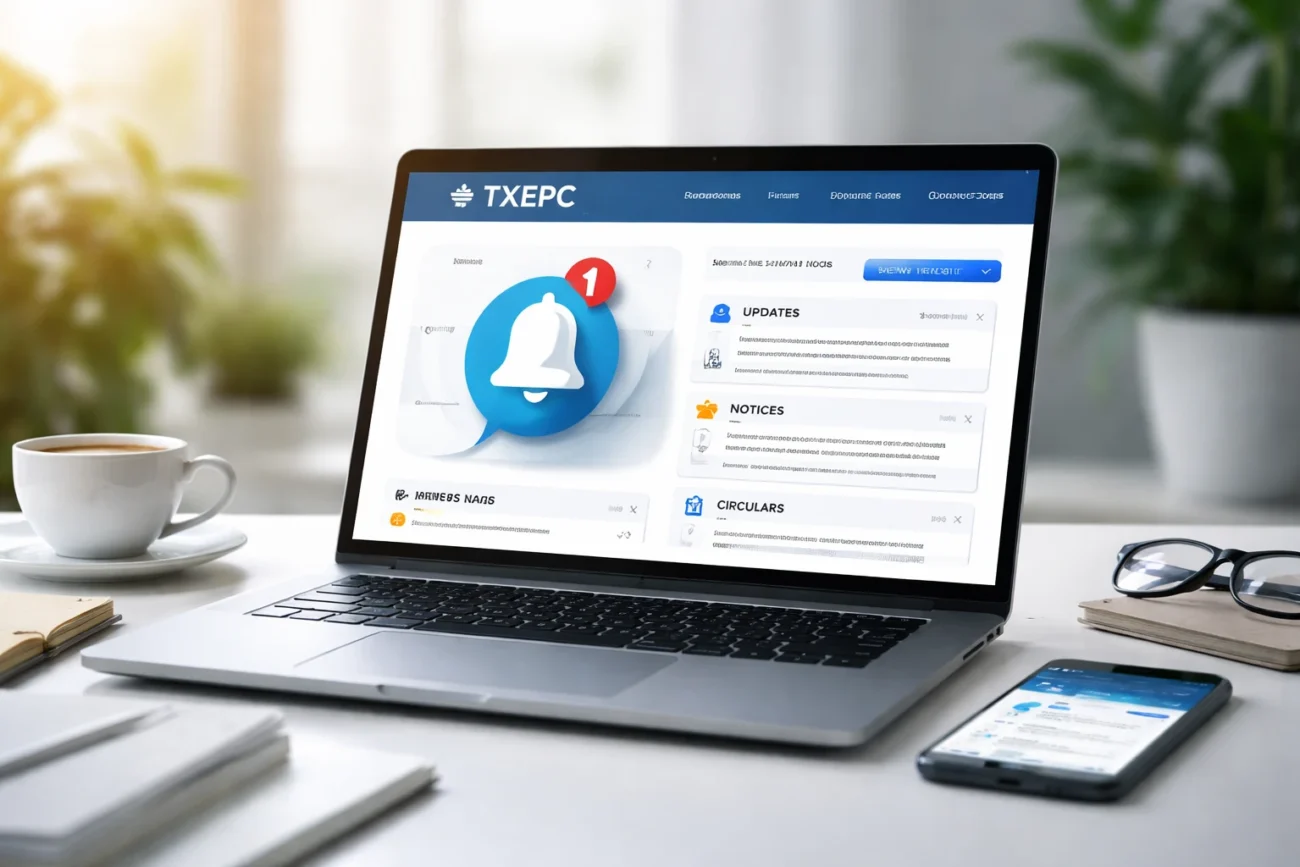
Search for “stay always updated with txepc site,” and you’ll quickly notice something odd. There are plenty of pages telling you how to follow it—turn on notifications, bookmark the page, check daily—but very few explain what TXEPC actually is or whether it’s even a reliable source.
That gap matters. Because staying updated only helps if you trust what you’re reading.
This article takes a different approach. Instead of jumping straight into tips, it starts with the basics: what people mean by the TXEPC site, what kind of updates it appears to publish, and how to follow it in a way that saves time without exposing you to misleading information.
What People Mean by “TXEPC Site”
The phrase itself is unclear, and that’s part of the problem. “TXEPC” does not appear widely in official directories or well-known institutional listings, at least not in a way that’s easy to verify at first glance. Yet the term shows up across multiple blog posts and SEO-driven pages, often described as a source of updates, notices, or industry-related content.
But here’s the thing: many of those pages repeat the same claims without pointing back to a clear, authoritative origin. Some mention a domain like txepc.org, others refer to it more loosely as a platform for updates or announcements. That inconsistency makes it hard for a reader to know whether they’re dealing with an official body, a niche publication, or a site that has gained attention mainly through recycled content.
So before worrying about staying updated, a smarter first step is to confirm what you’re actually following.
Is TXEPC an Official or Verified Source?
This is where caution pays off. A reliable website usually leaves a clear trail: an “About” page with real names, contact information that goes beyond a form, and some trace of its presence outside its own pages. That could be references from recognized organizations, media mentions, or at least a transparent explanation of who runs the platform.
In the case of TXEPC, publicly available information is uneven. Some sources describe it as a site for industry updates, possibly tied to export or trade-related content. Others suggest it covers a broader mix of topics, including general updates and notices. But when you try to verify those claims independently, the evidence is thin or scattered.
So what does this actually mean? It doesn’t automatically make the site unreliable. But it does mean you should treat it as a source that needs verification, not blind trust. If you’re going to rely on its updates, you need a method for cross-checking what it publishes.
What Kind of Updates Does the TXEPC Site Appear to Offer?
Across the content that references TXEPC, a few themes show up repeatedly. The site is often described as publishing notices, updates, announcements, and sometimes industry-related information. In some cases, it’s linked to trade or export-related material, while in others it’s framed more broadly as an information hub.
Here’s where it gets interesting. That lack of consistency suggests the site’s scope may not be clearly defined, or that different writers are projecting assumptions onto it. A careful reader shouldn’t rely on secondhand descriptions alone. Instead, the safest approach is to review the site directly and note what it actually publishes over time.
If the updates include dated notices, linked documents, or references to external institutions, those are good signs. If the content feels generic, lacks timestamps, or doesn’t point to verifiable sources, that’s a signal to slow down and double-check.
How to Stay Always Updated With TXEPC Site Efficiently
Once you’ve confirmed that the site is worth following, the next challenge is practical: how do you keep up without wasting time refreshing pages all day?
The simplest method is still one of the most effective. Bookmark the site and check it at a fixed time each day or week. This works best if the site doesn’t update constantly but posts in batches. It also forces you to scan updates in context instead of reacting to every single post.
Browser notifications can help, but only if the site supports them and only if you trust the alerts. If notifications are available, turn them on selectively and avoid allowing too many sites to send push alerts. Otherwise, your phone becomes noise, not a tool.
Email subscriptions are another common option. If TXEPC offers a newsletter or mailing list, that can be a reliable way to receive updates in one place. That said, always check what kind of emails you’re signing up for. A legitimate site usually explains its frequency and purpose clearly.
A Smarter Way to Track Updates Without Missing Anything
Checking manually works, but it’s not the most efficient method. A better approach is to build a simple tracking system that doesn’t depend entirely on memory.
Start with a feed reader or aggregator. Even if TXEPC doesn’t advertise an RSS feed, many modern tools can monitor page changes and alert you when new content appears. This gives you updates without constant checking.
Another approach is to use browser extensions that track changes on specific pages. If a key section of the site—like announcements or notices—gets updated, you’ll know without having to visit repeatedly.
That said, there’s a catch. Automation only works if the source is stable. If the site changes its structure or posts irregularly, automated tools may miss updates or flag irrelevant changes. So it’s best to combine automation with occasional manual checks.
How to Verify TXEPC Updates Before Acting on Them
This is the step most articles skip, and it’s where mistakes happen.
If an update seems important—especially if it involves deadlines, policies, or financial decisions—don’t rely on a single source. Look for confirmation elsewhere. That might mean checking an official government website, a recognized industry body, or another established platform covering the same topic.
Pay attention to dates. A notice without a clear timestamp can be misleading, especially if it’s been republished or reshared without context. Cross-check whether the update is current or recycled.
Also watch for original documents. If the site links to PDFs, official circulars, or external announcements, those carry more weight than plain text summaries. If there’s no source behind the claim, treat it with caution.
Who Should Follow TXEPC Site Updates
Not every reader needs to track TXEPC, and that’s worth saying upfront. Based on how the site is described, it may be most useful for people connected to specific industries, possibly including trade, exports, or project-related sectors.
But here’s the thing: because the site’s identity isn’t clearly defined, its usefulness depends on what it actually publishes over time. For some readers, it may be a helpful niche source. For others, it may duplicate information available elsewhere in a more reliable form.
That’s why it’s important to evaluate the site based on your own needs. If its updates consistently offer value and pass basic verification checks, it’s worth following. If not, there’s no reason to rely on it just because it appears in search results.
Common Red Flags to Watch For
The internet is full of sites that look useful at first glance but fall apart under closer inspection. TXEPC may or may not fall into that category, but the same warning signs apply.
If a page lacks clear authorship or contact details, take a step back. If updates don’t include dates, references, or links to original sources, be careful. If multiple articles repeat the same wording without adding new information, you’re likely looking at recycled content rather than original reporting.
Not everyone agrees on what counts as a trustworthy source, but basic transparency is a good place to start. If a site doesn’t meet that standard, it shouldn’t be your only source of information.
What a Weekly TXEPC Tracking Routine Looks Like
You don’t need a complex system to stay informed. A simple routine often works best.
Check the site once or twice a week, depending on how often it updates. Scan for new posts, paying attention to dates and categories. If something looks important, verify it before acting on it.
Combine that with one automated method, like a feed reader or page tracker. That way, you get alerts without relying entirely on them.
Over time, you’ll get a sense of how often the site publishes and whether its updates are worth your attention. That’s when you can decide whether to keep it in your regular rotation or move on.
Frequently Asked Questions
What is the TXEPC site?
The TXEPC site appears to be a platform referenced across various online articles as a source of updates or notices. However, publicly available information about its official status or ownership is limited, so it’s important to verify its credibility directly.
Is TXEPC an official website?
There is no clear, widely recognized confirmation that TXEPC is an official or government-backed site. That doesn’t mean it’s unreliable, but it does mean users should confirm important information through additional sources.
How can I stay always updated with TXEPC site?
The most effective way is to combine manual checks with automation. Bookmark the site, check it regularly, and use tools like feed readers or page trackers to catch updates without constant monitoring.
Does TXEPC offer notifications or email alerts?
Some sources suggest that the site may offer notifications or subscription options, but this should be confirmed directly on the site. If available, use them carefully and avoid relying on alerts alone.
How do I verify updates from TXEPC?
Cross-check any important update with other trusted sources. Look for official documents, confirm dates, and avoid acting on information that cannot be traced back to a reliable origin.
Who should follow TXEPC updates?
The site may be most useful for readers interested in industry updates, notices, or specific sectors linked to its content. Its value depends on how relevant and accurate its updates are over time.
Conclusion
The phrase “stay always updated with txepc site” sounds simple, but the reality behind it is more complicated. The web is full of advice on how to follow the site, yet very little effort goes into explaining what it is or whether it deserves your attention in the first place.
That’s where a more careful approach makes a difference. Instead of treating TXEPC as a given, treat it as a source that needs to earn your trust. Check its content, verify its updates, and compare it with more established platforms before relying on it.
That said, staying informed doesn’t have to be difficult. With a mix of manual checks and simple tracking tools, you can keep up with any site efficiently. The key is not just staying updated, but staying updated with the right information.
In the end, the goal isn’t to follow every update. It’s to follow the ones that matter—and to know they’re worth your time.
