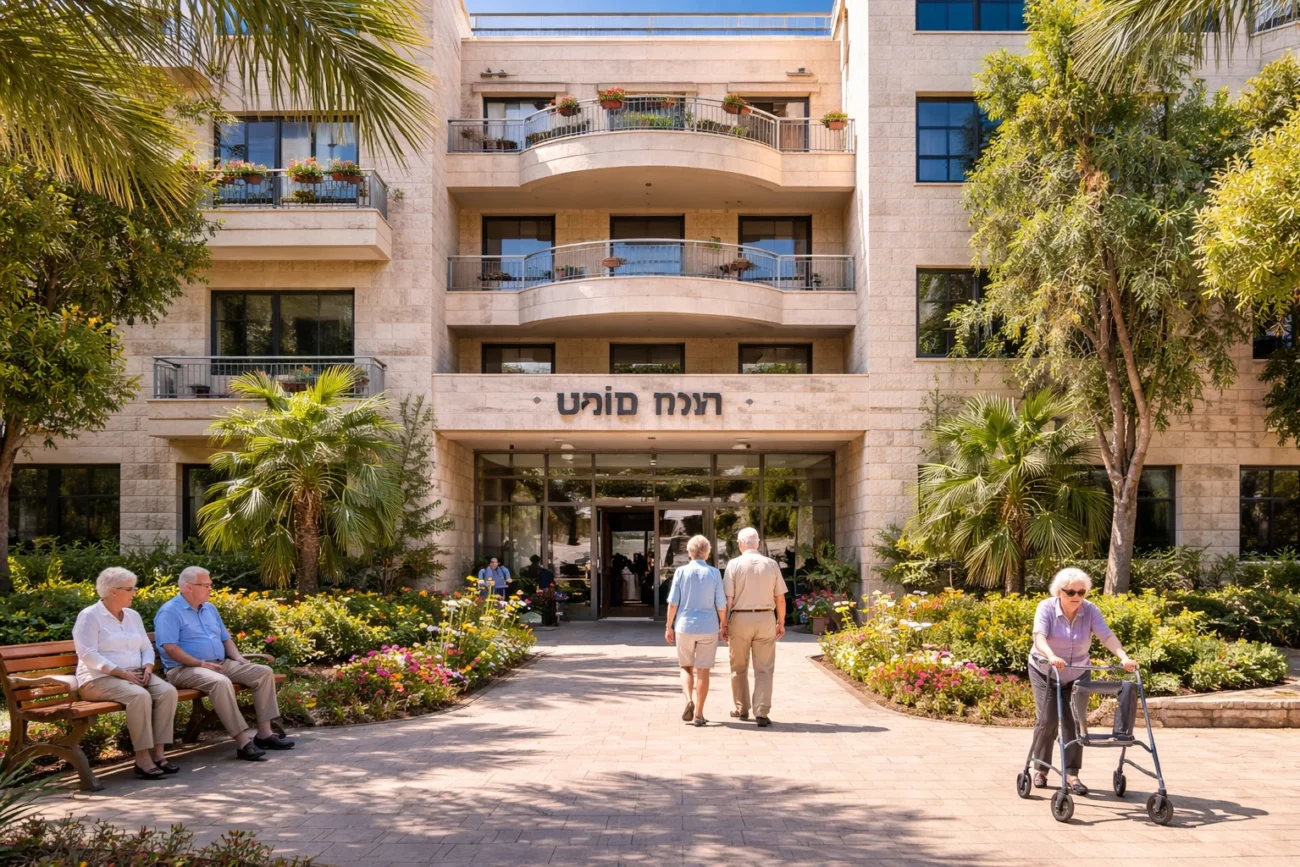
Search for “beit bart,” and you’ll run into a strange mix of answers. Some pages describe a cultural idea, others hint at a hidden destination, and a few suggest it’s part of ancient tradition. But look closer, and a clearer picture starts to form—one that’s far less mysterious and far more practical.
Beit Bart is, in fact, a real place. It’s a senior residence in Jerusalem, connected to the Reuth organization, located along Hebron Road in the Baka neighborhood. The confusion comes from inconsistent spelling, thin online sources, and a handful of websites that turned a specific institution into something abstract and misleading.
So what does “beit bart” actually refer to? And why has the internet made it harder to understand than it should be?
What Beit Bart Actually Is
At its core, Beit Bart—often also spelled Beit Barth—is a residential facility for older adults in Jerusalem. It sits at 56 Hebron Road, a busy artery that runs through one of the city’s more established neighborhoods. The building is part of a network of senior housing services operated by Reuth, a long-standing Israeli nonprofit known for healthcare and rehabilitation services.
This isn’t a nursing home in the strict sense. Residents live in private apartments rather than shared medical wards, and the emphasis is on maintaining independence for as long as possible. But it’s not fully independent housing either. The facility offers access to medical support, organized social life, and services designed to bridge the gap between living alone and needing full-time care.
That middle ground is where Beit Bart fits. It’s what Israelis often call “protected housing,” a model that combines residential autonomy with built-in support.
Beit Bart vs. Beit Barth: Why the Name Changes
The name confusion starts with transliteration. In Hebrew, בית ברט can be rendered into English in more than one way. Some official and semi-official listings use “Beit Bart,” while others use “Beit Barth.”
Neither is necessarily wrong. But here’s the problem: search engines treat them as separate terms, and users often assume they refer to different places. In reality, they point to the same institution.
That small spelling difference has had an outsized effect. It’s one of the reasons search results are cluttered with mismatched or low-quality explanations. Once a few sites got it wrong, others followed, copying phrasing and adding their own guesses about what the term might mean.
The result is a keyword that looks vague but isn’t.
Where It Is and Why Location Matters
Beit Bart sits in Baka, a neighborhood in southern Jerusalem known for its mix of older homes, small apartment buildings, and a population that leans toward the religious-Zionist community. Hebron Road, where the building is located, is well connected to public transportation and within reach of synagogues, shops, and medical services.
That setting is part of the appeal. For many residents, moving into a place like Beit Bart isn’t just about safety or health. It’s about staying in a familiar social and cultural environment while gaining access to support that may become necessary over time.
The building itself is designed with that transition in mind. Residents live in self-contained units, often one- or two-room apartments, with shared spaces available for dining, activities, and gatherings. It’s not a hospital setting, and it doesn’t try to be one.
Who Lives There
Beit Bart primarily serves older adults who can still manage daily life but benefit from having help nearby. That includes people who live alone, couples who want to simplify their living situation, and families looking for a stable environment for aging parents.
The community has a distinct character. It tends to attract residents who are religious or traditional but not ultra-Orthodox. That shapes everything from the daily schedule to the social programming and the rhythm of life inside the building.
Meals, prayer options, and holiday observances are all structured around that shared identity. For some residents, that familiarity matters as much as the physical services offered.
How the Living Model Works
The structure at Beit Bart falls somewhere between independent living and assisted living. Residents typically move into private apartments, bringing their own furniture and maintaining control over their daily routines.
But support is always within reach. Staff are available for emergencies, and there’s access to medical services when needed. Social workers, activity coordinators, and maintenance teams help keep the environment stable and responsive.
Here’s where it gets interesting. The goal isn’t just to provide care—it’s to delay the need for more intensive care. By offering light support early, facilities like Beit Bart aim to help residents stay independent longer.
That approach reflects a broader shift in elder care. Instead of waiting until someone requires full-time nursing, the system tries to create a softer landing.
Services and Daily Life
Daily life inside Beit Bart revolves around routine and choice. Residents can cook in their own apartments or take part in communal meals. Activities are offered throughout the week, from lectures to exercise classes to cultural events.
Medical support exists, but it’s not always visible. There’s typically a system for monitoring health needs and responding quickly if something changes. Emergency assistance is available, and staff are trained to handle a range of situations.
Social interaction is another key element. Loneliness is a major concern for older adults living alone, and facilities like this are built to counter that. Shared spaces, organized events, and informal gatherings all play a role.
But not everyone uses these features in the same way. Some residents remain highly independent and engage only occasionally, while others rely more heavily on the community structure.
The Role of Reuth
Beit Bart operates under the umbrella of Reuth, an organization with deep roots in Israel’s healthcare system. Founded in the 1930s, Reuth has expanded into rehabilitation, geriatric care, and community services.
That affiliation matters. It provides a level of institutional backing that smaller, private facilities may not have. It also connects Beit Bart to a broader network of services, which can be important if a resident’s needs change over time.
Reuth’s model tends to focus on continuity. Instead of treating housing, care, and rehabilitation as separate systems, it tries to link them. Beit Bart is one piece of that structure.
Why the Internet Gets “Beit Bart” Wrong
Search results for “beit bart” are filled with articles that describe it as something entirely different—often a cultural or historical concept. These pages tend to repeat the same vague language, with little evidence and no clear sources.
That pattern isn’t unusual. Once a term becomes slightly obscure, it can be reshaped by content farms looking for easy traffic. Writers guess at meanings, copy each other, and fill in gaps with generic descriptions.
The problem is that those pages don’t hold up under scrutiny. They rarely provide addresses, organizational details, or verifiable information. They describe something that sounds meaningful but doesn’t connect to a real-world entity.
Beit Bart is a good example of how that process works. A simple spelling variation and a lack of clear English-language sources created space for misinformation to spread.
What Families Should Know Before Choosing It
For families considering Beit Bart as an option, the key questions go beyond location and reputation. Cost is a major factor, and pricing structures can vary depending on the size of the apartment, the level of services, and the financial model used by the facility.
Admission requirements also matter. Some residents move in while still fully independent, while others may already need a certain level of support. Understanding where the facility draws that line is important.
Then there’s the issue of long-term care. Beit Bart is not designed for residents who require intensive medical supervision. Families need to consider what happens if those needs increase. In some cases, that may mean transitioning to another facility within the Reuth system or elsewhere.
There’s a catch, though. These transitions can be emotionally and logistically challenging. Planning ahead can make a significant difference.
How It Fits Into the Bigger Picture of Senior Living in Israel
Beit Bart is part of a broader network of senior housing options in Israel, each with its own model and target population. Some facilities are highly medicalized, while others focus almost entirely on independent living.
The protected housing model sits in between. It reflects a growing recognition that aging doesn’t happen in a single step. People move gradually from independence to needing assistance, and the system has to adapt to that reality.
In cities like Jerusalem, where housing is expensive and families are often spread out, these facilities fill a practical need. They offer stability without requiring a full leap into institutional care.
That balance is what makes places like Beit Bart relevant, even if they don’t attract much attention outside their immediate context.
Frequently Asked Questions About Beit Bart
What is Beit Bart?
Beit Bart is a senior residential facility in Jerusalem that offers apartment-style living with access to support services. It is designed for older adults who want to remain independent while having assistance available when needed.
Is Beit Bart the same as Beit Barth?
Yes. The two names refer to the same place. The difference comes from how the Hebrew name is translated into English, which leads to multiple spellings online.
Where is Beit Bart located?
It is located at 56 Hebron Road in the Baka neighborhood of Jerusalem, a well-established area with access to transportation, services, and community life.
Is Beit Bart a nursing home?
No, not in the traditional sense. It is closer to assisted living or protected housing, where residents have their own apartments and receive support as needed rather than full-time medical care.
Who runs Beit Bart?
The facility is operated by Reuth, an Israeli nonprofit organization involved in healthcare, rehabilitation, and senior services.
Who is Beit Bart designed for?
It is intended for older adults who are still relatively independent but want a safer, more supportive living environment with access to social and medical resources.
Conclusion
Beit Bart isn’t a hidden cultural concept or a symbolic phrase. It’s a real place with a clear purpose, serving a specific community in Jerusalem. The confusion around its name says more about the internet than it does about the institution itself.
That said, the mix-up has consequences. When search results are filled with vague or inaccurate descriptions, people looking for real information can end up more confused than when they started. For families making decisions about senior living, that’s not a small problem.
The reality is simpler and more grounded. Beit Bart offers a structured environment where older adults can maintain independence while gaining access to support. It reflects a broader shift in how aging is managed, one that prioritizes flexibility over rigid categories.
So what does this actually mean? It means that behind an unclear keyword is a very concrete answer. And once you strip away the noise, the picture becomes much easier to understand.
