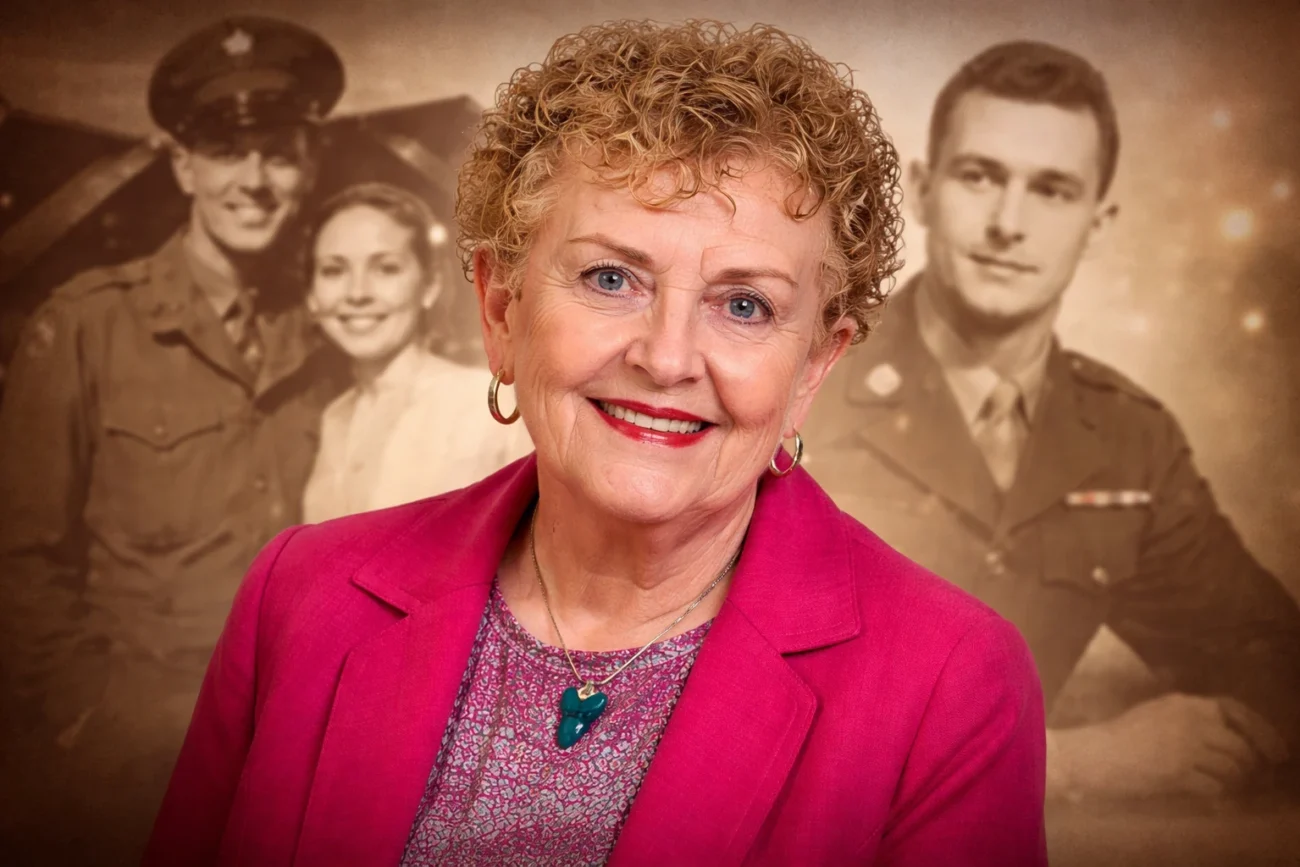
Long before the Playboy Mansion became a symbol of excess and celebrity, Hugh Hefner was a young man trying to build a life in postwar Chicago. At his side during those early years was Mildred “Millie” Williams, his first wife, a woman whose name continues to surface decades later despite her own careful distance from public life. She never sought attention, never built a public persona, and yet remains tied to one of the most recognizable figures in American pop culture.
That tension—between visibility and privacy—is what makes Millie Williams an enduring subject of curiosity. She wasn’t a celebrity in her own right, but her life intersected with a turning point in American media history. To understand her story is to step back into a quieter, more uncertain version of Hugh Hefner’s life, before the brand, before the myth, and before the world knew his name.
Early Life and Family
Mildred Williams was born on March 10, 1926, in Chicago, Illinois, a city that would shape both her early years and her future. She grew up during the Great Depression, in a time when stability mattered more than ambition and privacy was rarely compromised. Details about her family and upbringing remain limited, which speaks to the kind of life she lived—one that never invited scrutiny.
Chicago in the 1930s and 1940s was a place of contrasts, balancing industrial growth with economic hardship. For young women like Millie, expectations were clear: education, marriage, and family were the most common paths. There is little public record of her schooling, but like many of her peers, she likely attended local schools and lived within a close-knit community.
What’s striking is not what we know about her early years, but what we don’t. Unlike the lives of celebrities that are picked apart in detail, Millie Williams’ early life has remained largely intact and untouched. That absence of information would become a defining feature of her public story.
Meeting Hugh Hefner
Millie Williams met Hugh Hefner in Chicago during the 1940s, when both were young and still shaping their futures. Hefner was a bright, ambitious student who would later attend the University of Illinois, where he earned a degree in psychology. At the time, though, he was far from the media mogul he would become.
Their relationship developed in the years surrounding World War II, a period when many young couples moved quickly toward marriage. The war had a way of accelerating decisions, and for Millie and Hugh, it created a sense of urgency about building a life together. They shared a conventional vision of the future, one rooted in stability and family.
That said, their relationship wasn’t without complications. Years later, Hefner would speak openly about their early marriage, including emotional challenges that shaped his outlook. But at the time, theirs appeared to be a typical mid-century romance, grounded in shared goals and familiar expectations.
Marriage and Early Family Life
Millie Williams and Hugh Hefner married on June 25, 1949, in Chicago. It was a traditional wedding, marking the beginning of what both likely believed would be a lifelong partnership. Hefner soon found work in publishing, and the couple began building a household together.
They had two children during their marriage: Christie Hefner, born in 1952, and David Hefner, born in 1955. Christie would later become a prominent figure in her own right, serving as CEO of Playboy Enterprises for more than two decades. David, on the other hand, chose a more private path, staying largely out of the public eye.
The early years of their marriage were defined by modest living and growing responsibilities. Hefner was still finding his footing professionally, working as a copywriter and editor before launching his own magazine. Millie, like many women of her time, focused on raising their children and maintaining the household.
A Turning Point in the Marriage
Here’s where the story shifts, and where public interest tends to concentrate. In later interviews, Hugh Hefner spoke about a moment early in their marriage that deeply affected him. He said that while he was serving in the Army, Millie confessed to having an affair before their wedding.
Hefner described the experience as emotionally devastating, something that changed how he viewed relationships and intimacy. He later suggested that this moment contributed to his decision to separate love from sex in his personal philosophy. It became part of the narrative that surrounded his later life and work.
But here’s the thing: this account comes primarily from Hefner himself. Millie Williams never publicly shared her version of events, and there are no detailed records that confirm or expand on the story from her perspective. That gap matters, because it reminds us how much of her story has been filtered through someone else’s voice.
Divorce and Life After Hefner
Millie Williams and Hugh Hefner divorced in 1959, after about ten years of marriage. By that point, Hefner was on the verge of launching Playboy, which would debut in 1953 and grow rapidly in the years that followed. Their separation came just as his public life was beginning to take shape.
For Millie, the divorce marked a turning point in the opposite direction. While Hefner moved toward greater visibility, she stepped away from it. She did not pursue a public career, give interviews, or attach herself to the growing Playboy narrative.
Reports indicate that she later remarried, becoming Millie Williams Gunn after marrying Edwin Gunn. Details about that marriage remain sparse, consistent with her lifelong preference for privacy. She lived outside the spotlight, even as her former husband became one of the most recognizable figures in media.
Relationship With Her Children
Although Millie Williams kept a low public profile, her role as a mother connected her to a more visible legacy. Christie Hefner, her daughter, would go on to lead Playboy Enterprises from 1988 to 2009, guiding the company through major changes in media and culture.
Christie has occasionally spoken about her upbringing, though she has largely maintained the same discretion that characterized her mother’s life. David Hefner, Millie’s son, has remained even more private, with little public information available about his career or personal life.
The relationship between Millie and her children appears to have been stable and grounded, based on what can be inferred from public records. Unlike the more publicized dynamics of Hefner’s later relationships, this part of her life unfolded quietly and without media attention.
A Life Outside the Spotlight
What stands out most about Millie Williams is how thoroughly she avoided public life. Even as interest in Hugh Hefner grew, she did not participate in interviews, documentaries, or retrospectives. Her absence from these narratives is as telling as any documented detail.
This wasn’t unusual for women of her generation, especially those who divorced before their former partners became famous. But it’s still striking given how much attention has been paid to Hefner’s personal life. Other partners and spouses became part of the Playboy story, willingly or not, but Millie remained separate from it.
That choice has shaped how she is remembered. There are no widely circulated photographs from her later years, no public statements, and no firsthand accounts that offer insight into her thoughts about Hefner’s success or the cultural impact of Playboy.
Conflicting Reports About Her Later Years
In recent years, renewed interest in Hugh Hefner—especially following his death in 2017—has led to more searches for information about Millie Williams. Some sources have suggested that she lived a long life well into her nineties, while others have reported that she passed away in late 2025.
The truth is less clear than many headlines suggest. Reliable, widely recognized sources have not consistently confirmed her death, and much of the reporting appears to rely on secondary or less verifiable outlets. That uncertainty highlights a broader issue: when a person chooses privacy, even basic facts can become difficult to confirm.
So what does this actually mean for readers? It means approaching her story with care, acknowledging what is known while being honest about what isn’t. In Millie Williams’ case, the gaps in the record are part of the story itself.
Why Millie Williams Still Matters
It’s fair to ask why someone with such a limited public profile continues to draw attention. The answer lies in her connection to a figure who reshaped American media and cultural attitudes toward sex. Millie Williams represents a version of Hugh Hefner’s life that existed before all of that.
Not many people know this, but Hefner himself often pointed back to his early marriage when reflecting on his later choices. Whether or not those reflections fully capture reality, they have become part of his public narrative. And by extension, they have kept Millie’s name in circulation.
There’s also a broader fascination with the people who stand just outside the spotlight. Readers are often drawn to the early chapters of famous lives, looking for clues about what came next. Millie Williams occupies that space, offering a glimpse into a time before fame changed everything.
Frequently Asked Questions
Frequently Asked Questions
Who was Millie Williams?
Millie Williams, whose full name was Mildred Williams, was the first wife of Hugh Hefner, the founder of Playboy magazine. She was born in 1926 in Chicago and married Hefner in 1949. The couple had two children together before divorcing in 1959. Despite her connection to a public figure, she lived most of her life privately.
How long were Millie Williams and Hugh Hefner married?
Millie Williams and Hugh Hefner were married for about ten years. They wed in 1949 and divorced in 1959, during a period when Hefner was beginning to establish his career in publishing. Their marriage took place before the rise of Playboy as a major cultural force. By the time they separated, their lives were moving in very different directions.
Did Millie Williams remarry after Hugh Hefner?
Yes, Millie Williams is reported to have remarried after her divorce from Hugh Hefner. She later became known as Millie Williams Gunn after marrying Edwin Gunn. However, details about this later marriage are limited. She maintained a private life, and little verified information is available about her personal relationships after the divorce.
Did Millie Williams have children?
Millie Williams had two children with Hugh Hefner. Their daughter, Christie Hefner, became a prominent business executive and served as CEO of Playboy Enterprises for many years. Their son, David Hefner, has remained largely out of the public eye. Both children were born during the couple’s marriage in the 1950s.
Is Millie Williams still alive?
There are conflicting reports about whether Millie Williams is still alive. Some sources suggest she lived into her late nineties, while others claim she died in December 2025. However, widely confirmed and authoritative records are limited. As a result, her current status remains uncertain in the public record.
Conclusion
Millie Williams lived a life that resists easy storytelling. She appears in history at a specific moment, tied to a marriage that would later be viewed through the lens of fame and cultural change. Yet beyond that connection, much of her life remains quiet and undocumented.
That absence is not a flaw in the record but a reflection of her choices. She did not build a public identity, did not seek recognition, and did not attach herself to the growing mythology of Playboy. While others stepped into that world, she remained outside it.
There’s something revealing in that distance. It reminds us that not every life connected to fame becomes part of its spectacle. Some people pass through those moments and continue on their own terms, leaving behind only fragments of a story.
Millie Williams’ name may continue to surface in searches and biographies, but the fuller truth of her life lies in what she kept to herself. And in a culture that often demands constant visibility, that kind of privacy stands out more than ever.
