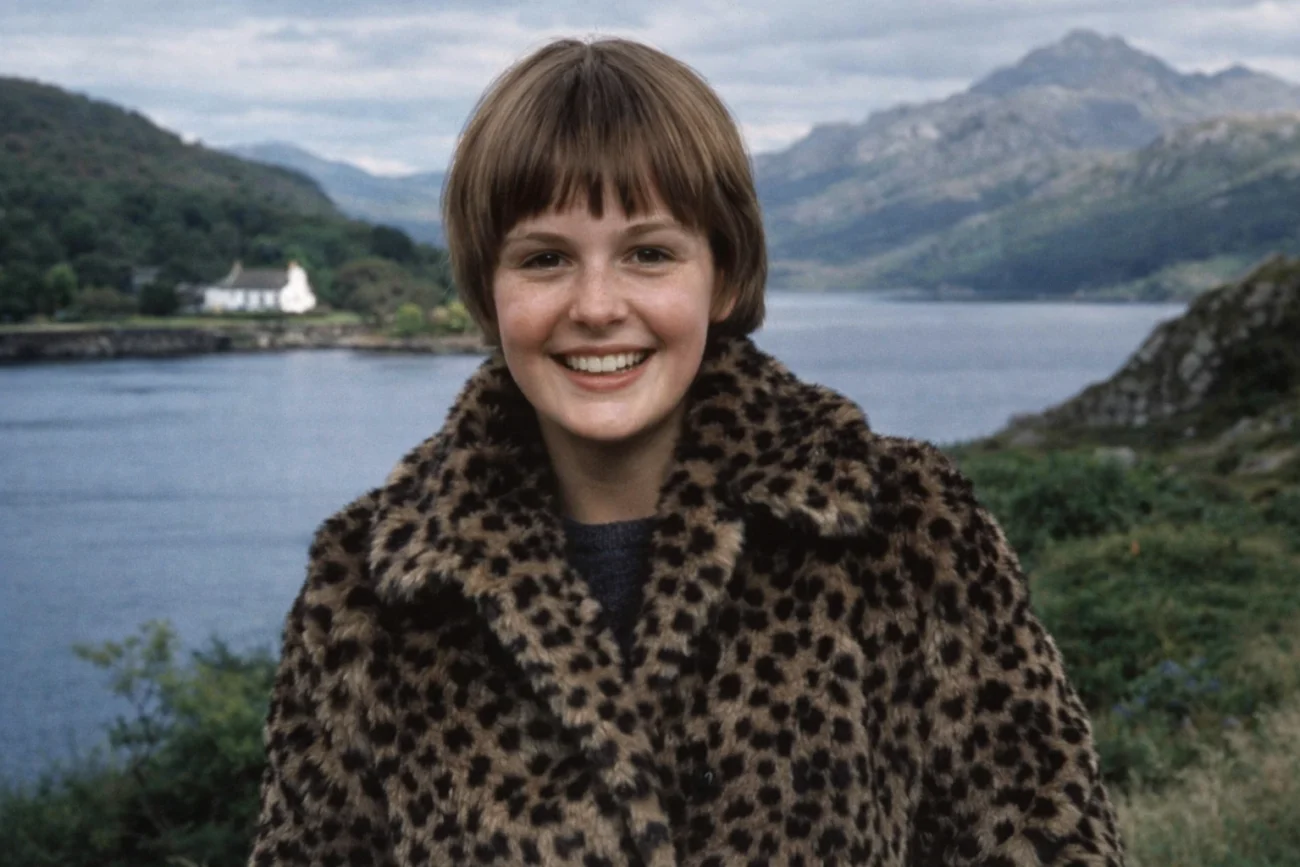
Long before Carol Kirkwood became one of the most familiar faces on British morning television, she was a schoolgirl growing up in a remote corner of the Scottish Highlands. The 1970s, for her, were not years of public attention or professional milestones. They were quieter, shaped by family life, education, and the rhythms of a small community far removed from the BBC studios she would one day call home.
That decade matters more than it might first appear. It offers the only real window into the foundations of a career that would later stretch across decades on national television. But here’s the thing—there’s less documented detail than readers might expect, and that makes it even more important to separate what is known from what is often assumed.
Early Life and Family
Carol Kirkwood was born on 29 May 1962 in Morar, a coastal village in Inverness-shire, Scotland. She was one of eight children, growing up in a large, busy household where family life would have been both lively and demanding. Morar itself is a place defined by dramatic weather, open landscapes, and a strong sense of local identity, all of which formed the backdrop of her childhood.
The Kirkwood family was closely tied to the local community, and her parents were involved in running a hotel business in the area. That environment likely meant long hours and a strong work ethic, something often reflected in later interviews where she has spoken about the values she grew up with. Not many people know this, but growing up in such a setting often means children learn independence early, helping out and adapting to the needs of a family-run enterprise.
By the time the 1970s began, Kirkwood was entering her primary school years. She would have spent much of that decade balancing school life with the expectations of a large family. While there’s little in the way of detailed public anecdotes from those years, the broad outline is clear: this was a grounded upbringing, far from the spotlight, shaped by routine rather than ambition.
Growing Up in Morar During the 1970s
The 1970s in Morar were not defined by cultural shifts or media trends in the way they might have been in London or Glasgow. Life moved at a slower pace, and for a young Carol Kirkwood, that meant days shaped by school schedules, local traditions, and the changing seasons. Weather, in particular, would have been a constant presence, not as a career interest but as a fact of daily life.
Here’s where it gets interesting. Many profiles suggest that growing up in the Highlands somehow foreshadowed her future in weather broadcasting. The truth is more subtle. There’s no strong evidence that she was interested in meteorology as a child, but living in a region where weather affects everything—from travel to work—certainly builds awareness and respect for it.
During her teenage years in the later part of the decade, Kirkwood attended Lochaber High School in Fort William. That meant traveling from her home village into a larger town for education, expanding her world beyond the immediate confines of Morar. Like many teenagers of the time, she would have been navigating friendships, studies, and the early thoughts about what might come next.
The 1970s ended with Kirkwood on the edge of adulthood. There was still no clear path toward broadcasting or television. Instead, she was preparing for further education, carrying with her the steady, grounded outlook shaped by her upbringing.
Education and the Shift Toward Adulthood
After finishing school, Carol Kirkwood moved on to higher education, studying at Napier College of Commerce and Technology in Edinburgh. She graduated with a degree in commerce, a practical choice that reflected a focus on stable career options rather than creative industries. That decision fits with the picture of her early life—a young woman making sensible choices rather than chasing fame.
Edinburgh would have been a significant change from Morar. The city offered a broader cultural environment, more opportunities, and exposure to industries that didn’t exist in her hometown. But here’s the thing—there’s no indication that she entered university with a clear goal of working in television.
Instead, her early professional steps were modest. She joined the BBC as a secretary in the corporation’s secretarial reserve, a role that placed her inside the organization but far from the public eye. It was a quiet entry point, one that many would overlook but that proved to be crucial.
What’s surprising is how often careers in broadcasting begin this way. Rather than a dramatic breakthrough, they start with proximity—being in the building, understanding how things work, and gradually finding a way forward. Kirkwood’s path was no different.
Early Career Before Weather Broadcasting
Kirkwood’s initial years at the BBC were not spent presenting or reporting. She worked behind the scenes, gaining experience and familiarity with the workings of the broadcaster. After leaving the BBC for a period, she moved into radio, working with stations including Clyde 1 and Radio Forth.
Radio offered a different kind of exposure. It required voice skills, timing, and confidence, even if it lacked the visual element of television. For Kirkwood, it became an important stepping stone, helping her build the communication skills that would later define her on screen.
That said, her journey was not a straight line. She returned to the BBC in the 1990s, and it was only then that her path began to align with weather broadcasting. In 1998, she joined the BBC Weather Centre, marking the beginning of the career most viewers now associate with her name.
Looking back, the contrast between her 1970s life and her later career is striking. The decade that began in a small Highland village ended, many years later, with her standing in front of national audiences. But the connection between the two is less about destiny and more about steady progression.
Becoming a Familiar Face on BBC Breakfast
Carol Kirkwood’s role within BBC Weather grew steadily after she joined in 1998. She became a regular presence across BBC channels, delivering forecasts with a calm, approachable style that resonated with viewers. Her ability to explain complex weather patterns in simple terms became one of her defining strengths.
In 2010, she took on a more prominent role as the main weather presenter on BBC Breakfast. That position brought her into millions of homes each morning, turning her into one of the most recognizable figures in British television. But here’s the thing—her on-screen ease often hides the years of experience behind it.
Her work has not gone unnoticed. She has received awards from the Television and Radio Industries Club for best weather presenter, reflecting both her popularity and her professionalism. Unlike some television personalities, she has built her reputation quietly, without controversy or dramatic reinvention.
Over time, Kirkwood became more than just a presenter. She became a consistent presence, someone viewers came to rely on, whether delivering forecasts during routine mornings or during periods of extreme weather.
Personal Life and Relationships
Carol Kirkwood has generally kept her personal life private, sharing only limited details publicly. She was married to Jimmy Kirkwood, a cricketer, but the couple later divorced. For many years, she chose not to discuss her personal life in detail, maintaining a clear boundary between her public role and private experiences.
In later years, she spoke more openly about her relationships, including finding love again after her divorce. That shift reflected a broader change in how public figures approach privacy, but she has still remained measured in what she shares.
There are no widely reported details about children, and she has not built her public identity around family life. Instead, her career has remained the central focus of her public image. That balance has likely contributed to her long-standing appeal, allowing viewers to connect with her without feeling they know more than she chooses to reveal.
Net Worth and Career Earnings
Carol Kirkwood’s net worth is not publicly confirmed, and estimates vary across sources. As a long-serving BBC presenter, her earnings would have been shaped by salary structures within the corporation, which are subject to transparency rules for top earners.
She has appeared on BBC salary lists in the past, though not always among the highest-paid presenters. Her income would have been supplemented by other work, including writing, as she has authored several novels alongside her broadcasting career.
But here’s the thing—her career has never been defined by wealth or commercial ventures. Unlike many television personalities, she has not pursued aggressive branding or endorsement deals. Her financial profile reflects a steady, long-term career rather than sudden spikes of income.
Recent Years and Departure from the BBC
In April 2026, Carol Kirkwood stepped away from the BBC after a career spanning nearly three decades with the broadcaster. Her departure marked the end of an era for BBC Breakfast viewers, many of whom had watched her deliver weather forecasts for years.
Her final broadcast was widely noted, with colleagues and viewers reflecting on her contribution to the program. It was not a dramatic exit but a measured one, consistent with her approach throughout her career.
Even after leaving the BBC, she remains active in public life, particularly through her writing. Her novels have found an audience, offering a different outlet for her storytelling instincts. That transition suggests that while one chapter has closed, another is still unfolding.
Why the 1970s Still Matter
At first glance, searching for “carol kirkwood 1970s” might seem oddly specific. After all, those years were long before her rise to national recognition. But the interest makes sense when you consider how audiences engage with public figures.
People want to understand where familiar faces come from. They want to trace the path back to its starting point, even if that starting point is quiet and undocumented. The 1970s represent that origin for Kirkwood—a decade that shaped her without defining her publicly.
The truth is, those years were ordinary in the best possible way. They were about family, school, and growing up, not about building a public persona. And that ordinariness may be part of what makes her later success feel so relatable.
Frequently Asked Questions
What does “Carol Kirkwood 1970s” refer to?
The phrase refers to Carol Kirkwood’s childhood and teenage years, as she was born in 1962 and spent the 1970s growing up in Scotland. During that time, she was not involved in broadcasting or public life. It’s simply a way of looking at her early background before her career began. Most searches using this phrase are driven by curiosity about her upbringing.
How old was Carol Kirkwood during the 1970s?
Carol Kirkwood was between the ages of 8 and 18 during the 1970s. That means the decade covers her primary school years through to the end of her secondary education. It was a formative period, but not one associated with professional achievements. Her career in broadcasting came much later.
Where did Carol Kirkwood grow up?
She grew up in Morar, a village in the Scottish Highlands. It’s a small coastal community known for its natural beauty and changing weather conditions. Her upbringing there has often been mentioned as part of her background. However, there is no strong evidence that it directly led her into weather presenting.
Was Carol Kirkwood on television in the 1970s?
No, she was not on television during the 1970s. At that time, she was still in school and had not yet begun her career. Her work in broadcasting started years later, after university and early roles within the BBC. The 1970s were entirely part of her private life.
What did Carol Kirkwood do before becoming a weather presenter?
Before joining the BBC Weather Centre in 1998, Kirkwood worked in various roles, including as a secretary within the BBC and later in radio broadcasting. She built experience behind the scenes before moving into on-air roles. Her path into weather presenting was gradual rather than immediate. That progression reflects a steady career development over time.
Conclusion
Carol Kirkwood’s story is not one of sudden fame or early discovery. It is a story that begins quietly, in a small Scottish village during the 1970s, long before television audiences came to recognize her face. Those early years were defined by family, education, and the everyday routines that rarely make headlines.
But here’s the thing—those foundations matter. They shaped the way she approached her career, the steadiness she brought to her work, and the sense of reliability that viewers came to trust. There is no dramatic turning point in the 1970s to point to, no single moment that explains everything. Instead, there is a gradual build, a life moving forward one step at a time.
Her later success at the BBC, and her long tenure on BBC Breakfast, feel more grounded when seen in that context. She did not arrive from nowhere. She came from a place, a family, and a set of experiences that, while ordinary, gave her the tools to succeed.
As she moves into the next phase of her life after leaving the BBC, the interest in her early years is unlikely to fade. If anything, it may grow. Because understanding where someone started often makes their achievements feel more real, and in Carol Kirkwood’s case, that starting point lies firmly in the quiet, formative years of the 1970s.
