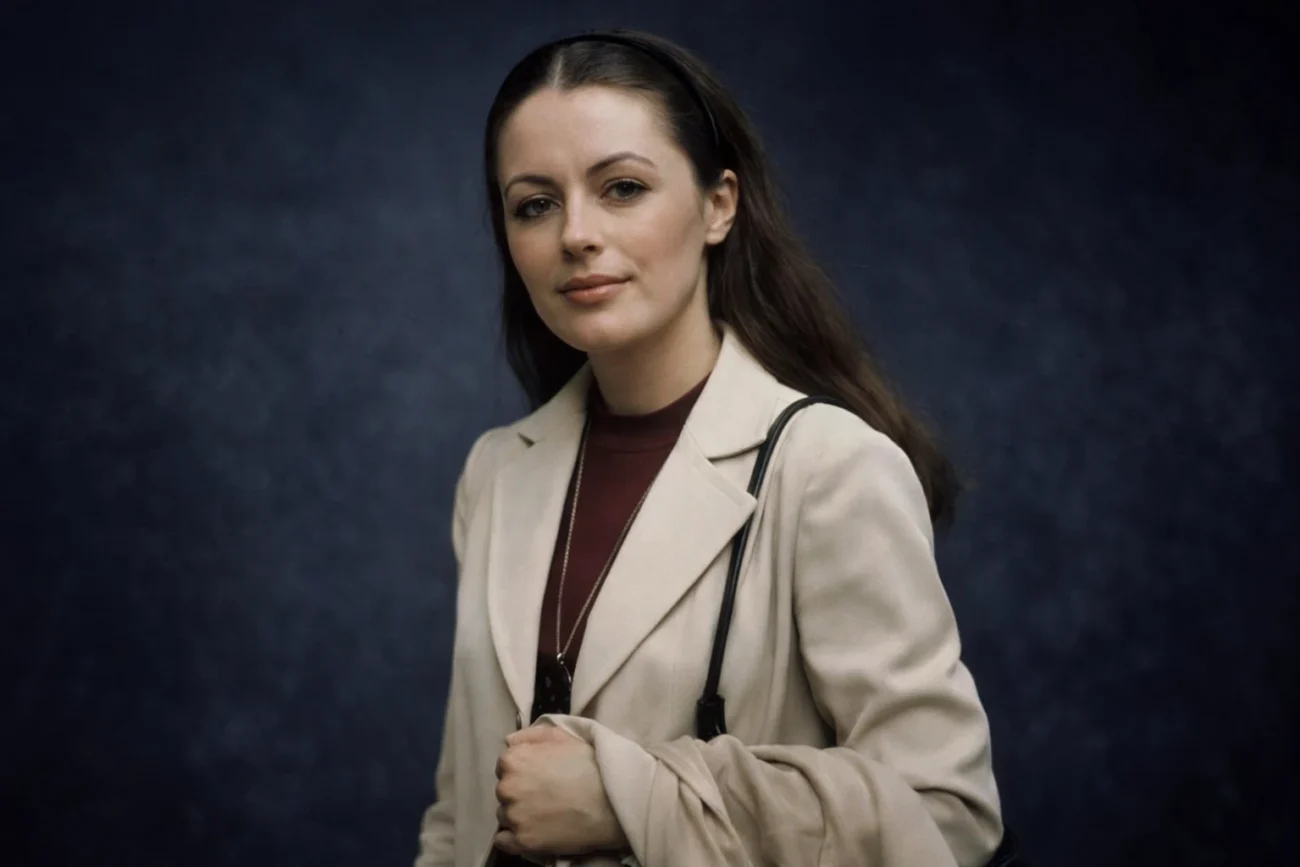
For decades, Sheila Buckley has existed in the public record as a supporting figure in one of Britain’s strangest political dramas. Her name tends to surface in connection with John Stonehouse, the Labour MP who faked his own death in 1974 and was later arrested halfway across the world. But Buckley’s story, while often overshadowed, is not simply a footnote. It is a story about proximity to power, loyalty under pressure, and the long shadow cast by scandal.
The renewed interest in Buckley in recent years has come largely from the ITV drama Stonehouse, which introduced a new generation to the bizarre case. Viewers searching her name are often trying to separate fact from fiction, and to understand what became of the woman who stood beside Stonehouse during his most controversial chapter. The truth is more grounded than the drama suggests, but no less compelling.
Early Life and Background
Public information about Sheila Buckley’s early life is limited, and that absence shapes how her story is told. Unlike politicians or public figures who leave long paper trails, Buckley entered the historical record through her association with Stonehouse rather than through a career that attracted attention on its own.
She is widely identified as Sheila Elizabeth Buckley, and some sources suggest she was born with the surname Black. But here’s the thing: details about her childhood, family background, and education remain largely undocumented in widely available sources. This lack of detail is not unusual for someone who worked behind the scenes in the mid-20th century, particularly in administrative roles.
What can be said with more confidence is that Buckley came of age in a period when women were increasingly entering professional office environments, including politics. Her path would eventually lead her into the orbit of one of Britain’s most ambitious—and ultimately troubled—politicians.
Entering John Stonehouse’s World
By the early 1970s, Sheila Buckley was working as a secretary to John Stonehouse, a Labour MP who had served in government and was seen as a capable, if sometimes controversial, political figure. Stonehouse held positions including Postmaster General and Minister of Aviation, and he was known for both his intelligence and his ambition.
Their professional relationship soon became personal. The two developed a romantic relationship while Stonehouse was still married, a fact that would later become central to how the story was reported in the press. At the time, however, their relationship remained largely out of public view.
Working closely with a senior politician meant that Buckley was exposed to the inner workings of political life. She was not simply an observer; she was part of the machinery that kept Stonehouse’s office running. That proximity would later place her in a difficult position when his career began to unravel.
The Disappearance That Shocked Britain
On November 20, 1974, John Stonehouse walked into the ocean in Miami, leaving his clothes neatly folded on the beach. It appeared to be a tragic suicide. News of his disappearance spread quickly, and for a time, he was presumed dead.
But Stonehouse was not dead. He had staged the entire scene in an attempt to escape mounting financial and political pressures. He traveled under assumed identities and eventually made his way to Australia, where he planned to start a new life.
Here’s where Buckley’s story becomes inseparable from his. Evidence later showed that she had knowledge of, and involvement in, aspects of Stonehouse’s plans. While the full extent of her awareness has been debated, she was not a distant bystander. She was connected to the events that followed his disappearance.
Stonehouse’s plan began to unravel in Australia when he was arrested in December 1974. Authorities initially suspected him of being a fugitive banker, but his true identity soon emerged. The case quickly became an international scandal, drawing intense media attention in Britain and beyond.
Legal Fallout and Public Scrutiny
The return of John Stonehouse to Britain brought a wave of legal proceedings, and Sheila Buckley found herself caught in the same storm. She was charged in connection with the case, reflecting the authorities’ view that she had played a role in supporting Stonehouse’s actions.
In 1976, Buckley received a two-year prison sentence, suspended for two years. That outcome meant she avoided time in prison, but the legal judgment still marked her public reputation. For someone who had lived largely outside the spotlight, the sudden exposure was significant.
The trial and its aftermath were widely reported, and Buckley’s name became tied to the scandal in a way that would endure for decades. While Stonehouse faced a far more severe sentence—he was convicted of multiple counts of fraud and sentenced to prison—Buckley’s involvement ensured that she would remain part of the narrative.
Not many people know this, but there is at least one recorded interview from 1978 in which Buckley spoke publicly about Stonehouse’s health while he was in prison. It offers a rare glimpse of her voice in a story that is otherwise dominated by courtroom transcripts and media coverage.
Life After the Scandal
After serving part of his sentence, John Stonehouse was released from prison in the late 1970s. By that time, his political career was over, and his public image had been permanently altered. But his relationship with Sheila Buckley continued.
In January 1981, Buckley and Stonehouse married in Hampshire. The marriage marked a new chapter for both of them, one that unfolded largely outside the glare of the media. They went on to have a son together, building a family life that contrasted sharply with the chaos of the preceding years.
That said, their post-scandal life was not entirely free from attention. Stonehouse’s past continued to attract interest, and his story was occasionally revisited in the press. Buckley, however, remained a more private figure, rarely giving interviews or appearing in public discussions about the case.
Stonehouse died in 1988 from a heart attack, closing the chapter on one of the most unusual political scandals in modern British history. For Buckley, his death marked another turning point, one that further distanced her from the events that had defined her public identity.
A Life Largely Out of View
What happened to Sheila Buckley after Stonehouse’s death is a question that continues to drive online searches. But here’s where it gets complicated. Reliable, detailed information about her later life is scarce.
Some sources suggest that she lived quietly in England, away from public attention. Others attempt to provide more specific details about her age, residence, or activities, but these claims are often difficult to verify through strong, independent sources. The truth is that Buckley appears to have stepped back from public life, and there is little confirmed reporting about her in recent decades.
This absence of information has led to a mix of speculation and repetition across online platforms. Many articles recycle the same limited facts, sometimes adding unverified details. For readers, it can be difficult to separate what is known from what is assumed.
What is clear is that Buckley did not seek to remain a public figure. Unlike some individuals connected to high-profile scandals, she did not turn her experience into a platform for media appearances or memoirs. Instead, she seems to have chosen privacy.
Portrayal in the ITV Drama Stonehouse
The release of the ITV series Stonehouse in 2023 brought Sheila Buckley back into public conversation. The show dramatized the events surrounding Stonehouse’s disappearance and capture, introducing new audiences to the story.
In the series, Buckley is portrayed by actress Emer Heatley. The portrayal emphasizes her relationship with Stonehouse and her role in the unfolding drama, though, like all dramatizations, it simplifies and interprets events for narrative effect.
That’s where viewers often run into confusion. Television drama can blur the line between documented fact and creative interpretation. While the series captures the broad outline of the scandal, it does not always reflect the full complexity of the real-life individuals involved.
For Buckley, the renewed attention has meant that her name once again appears in headlines and search queries. Yet the core facts about her life remain largely unchanged, rooted in events that took place nearly half a century ago.
A Figure Defined by Context
One of the challenges in writing about Sheila Buckley is that her public identity is so closely tied to someone else’s story. She is often described in relation to John Stonehouse—his secretary, his partner, his wife—rather than as an individual with a fully documented life of her own.
The truth is, this reflects how historical records are often shaped. People who operate behind the scenes, especially women in administrative roles during that era, were less likely to be the subject of detailed reporting. When they do appear in the record, it is often in connection with events that draw attention for other reasons.
But that doesn’t mean Buckley’s role was minor. She was present at critical moments in the story, and her actions had real consequences. Her legal case, her relationship with Stonehouse, and her decision to remain largely private afterward all form part of a narrative that continues to interest readers.
Frequently Asked Questions
FAQ
Who was Sheila Buckley?
Sheila Buckley was the secretary, partner, and later wife of British politician John Stonehouse. She became publicly known during the 1970s after Stonehouse faked his own death and fled abroad. Her involvement in aspects of the case led to legal proceedings, which brought her into the public eye. Beyond that period, she has remained a largely private individual.
Was Sheila Buckley involved in the John Stonehouse scandal?
Yes, Buckley was involved to a degree that led to legal consequences. Authorities determined that she had knowledge of, and involvement in, parts of Stonehouse’s activities. In 1976, she received a suspended prison sentence. While her role was not as central as Stonehouse’s, it was significant enough to be recognized in court.
Did Sheila Buckley go to prison?
No, she did not serve time in prison. She was given a two-year sentence that was suspended for two years. This meant that she avoided incarceration as long as she did not commit further offenses during that period. The sentence still marked her as legally accountable in connection with the case.
Did Sheila Buckley marry John Stonehouse?
Yes, Sheila Buckley married John Stonehouse in January 1981. The marriage took place after his release from prison and marked a new phase in their relationship. They went on to have a child together and lived a more private life after the scandal.
What happened to Sheila Buckley after John Stonehouse died?
After Stonehouse’s death in 1988, Buckley appears to have lived out of the public spotlight. There is limited verified information about her later life, and she has not been a regular presence in media coverage. Most accounts suggest she chose to remain private, and few confirmed details about her activities in later years are available.
Conclusion
Sheila Buckley’s story is, in many ways, a story about proximity—to power, to scandal, and to a moment in history that continues to capture attention. She did not set out to become a public figure, yet her life became intertwined with one of the most unusual political cases of the 20th century.
What stands out is not just her connection to John Stonehouse, but the way she navigated the aftermath. She faced legal consequences, public scrutiny, and the lasting association with a scandal that has been revisited again and again. And then, quietly, she stepped away.
That decision—to retreat from public life rather than remain part of the narrative—has shaped how she is remembered. It has left gaps in the record, but it has also preserved a degree of privacy that is rare for someone linked to such a widely reported case.
As interest in the Stonehouse story continues, fueled by television and renewed curiosity, Buckley’s name will likely keep appearing in searches. But the truth is, her story is already largely told. It exists in court records, archived reports, and the memories of a case that once dominated headlines.
What remains is a portrait of a woman who, for a brief and intense period, stood at the center of a national drama—and then chose to live the rest of her life out of view.
